






Experience everyday Spain through school, friendships, and family life.
Join Nacel’s Classic high school exchange in Spain and discover what it means to become part of a local community. Share everyday moments with your Spanish host family, get to know your classmates, and put your Spanish into practice beyond the classroom.
Interested in this program?
We're happy to help you plan your stay.
Next possible start dates: September 2027! Apply now!
Nacel’s High School Exchange in Spain gives students aged 15 to 17 the opportunity to experience Spanish life through school and family immersion. Participants join a local high school and stay with a carefully selected Spanish host family for a trimester, semester, or academic year. Placements are offered in different regions of Spain, with support from a local coordinator and access to a 24/7 emergency assistance line.
This Classic program is only offered to EU passport holders due to current student visa restrictions. Students with non-EU passports may do a short exchange program in Spain within the 90-day limit.
Live with a Spanish host family and go to a local High School in Spain
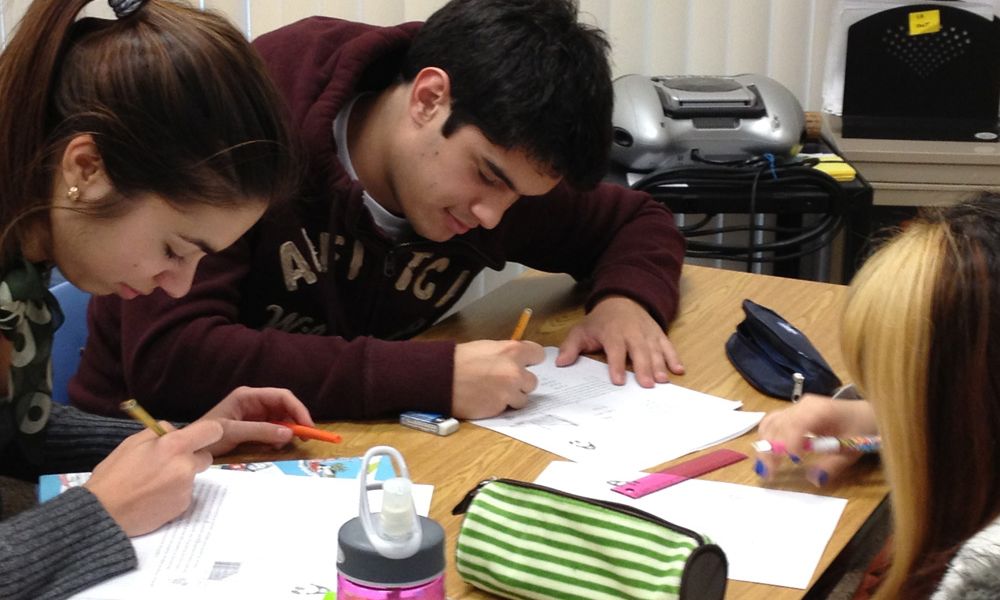
Discover Spain through the people you meet and the routines you share. During your exchange, you will attend classes with Spanish students, take part in family life, and practice Spanish in everyday situations.
Why learn Spanish? Spanish is one of the most spoken languages in the world: make a difference and become bilingual in Spain. The best way to achieve this is to experience an exchange program in Spain because a long-term Spanish cultural immersion will allow you to learn efficiently and practice. After a few weeks, you will even dream in Spanish!
School and homestay are equally important parts of the experience. You will learn to follow lessons in Spanish, find your place in a new classroom, and adapt to your host family’s habits. In return, you will have opportunities to share your own language, traditions, and interests. Exchange students in Spain attend regular classes in a Spanish public or private High School.
The Classic program suits students who are flexible about their placement and want to become involved in their host community. School and host family arrangements depend on availability and your individual application.
Subjects, grades, and academic Credits
- Depending on the grade, general classes in Maths, Sciences, Spanish Literature & History & Geography, etc. Spanish students attend 10-12 subjects a week at the High School level.
- The 10th grade mainly offers mandatory subjects (2 electives may be added), while the 11th and 12th grades allow students to specialize in Science and Technology, Social Science, or Humanities (as well as Arts in some schools).
- Grades 11 and 12 are dedicated to preparation for the Bachillerato (ages 16- 18).
- Public schools promote a good foundation of knowledge but also foster other skills such as presentation skills, learning independently, and other soft skills;
- Private schools strive for academic excellence and foster balanced growth for their students, with all sorts of sports, art forms, and sometimes quite unique skills-learning activities;
- During their secondary school studies, Spanish students usually attend classes from 8 am to 2 or 3 pm.
Your school placement
Exchange students are generally placed in Grade 10, known as 4º ESO, or Grade 11, known as 1º Bachillerato. Your final grade placement depends on your academic background, Spanish proficiency, school availability, and the host school’s decision. Specific subjects and electives cannot be guaranteed. Tell your Nacel advisor about any academic requirements before applying.
Grade 10 students may attend a public school or a state-subsidized private school called a concertado, at the public program rate. A uniform may be required at a concertado school. Private school placements are also available.
Grade 12 placement is particularly challenging and cannot be guaranteed. Students requesting this grade need a very strong command of Spanish.
Earning academic credit
Before registering for the program, students must gather all necessary information regarding the recognition of their exchange program abroad:
- If a grade report is required at the end of the program (Full academic year or semester program only), speak with your school counselor at home about how your exchange could count toward your studies. Your home school or educational authority determines whether credits earned in Spain will be recognized. Nacel is not responsible for the procedures and information required for this process in the home country. Note that your level in the Spanish language will also determine your ability to earn credits: start to study the language even more intensively as soon as you book your exchange program in Spain!
- If you do not need to earn credits, your school year will be recognized as an enriching gap year in Spain.
Learn more about the Spanish High School System:
- High School Abroad in Spain: learn more about Spanish grades and grade reports
- Benefits of High School Abroad in Spain: Key Features you need to know
Who is the Classic high school exchange in Spain for?
This program may be a good choice for students who:
- are happy to be placed in any region of Spain;
- consider their relationship with their host family to be an essential part of the experience;
- are looking for the most affordable high school exchange program in Spain;
- are flexible and willing to adapt to their host family’s lifestyle and customs;
- are comfortable living in a small town, village, or rural community;
- want an immersive experience within a Spanish family and local community;
- are ready to spend time with their host family and actively participate in everyday life.
This program may not be the best option for students who:
- want to choose a specific location: please explore our Select high school programs in Andalucía or Madrid.
- do not feel comfortable living with a host family: choose our full-time boarding school options;
- need to study in English: if you are a beginner in Spanish or wish to study in English while you are in Spain, consider attending a British School in Andalucía or an IB school in Andalucía.
- are looking for a shorter experience: Come for 4 to 10 weeks to experience Spanish cultural immersion in a host family and Spanish school.
Compare all our High School Abroad programs in Spain or ask your Nacel advisor to help you choose.
What can I expect from my exchange program in Spain?
- Everyday Spanish practice: Use the language at school, at home, and in your community.
- Local school life: Follow regular classes and get to know Spanish students of your age.
- Full-board homestay: Share meals and daily routines with a carefully selected host family.
- Personal orientation: Meet your local coordinator on arrival and receive guidance about settling in.
- Ongoing support: Your coordinator remains available to help and prepares a regular report on your experience.
- Emergency assistance: Access a 24/7 emergency phone number throughout your program.
Student Experiences in Spain
- Host Family in Spain: About Spanish Meals!
- Your Transition Year in Spain: school, sunshine, Spanish, and new stories to tell your friends
What will you take home?
Your exchange does not end when you leave Spain. You will return home with:
- stronger Spanish skills,
- greater independence,
- international friendships
- and a deeper understanding of another culture.
These experiences can continue to shape your studies, career choices, and outlook.
Get involved in your local community
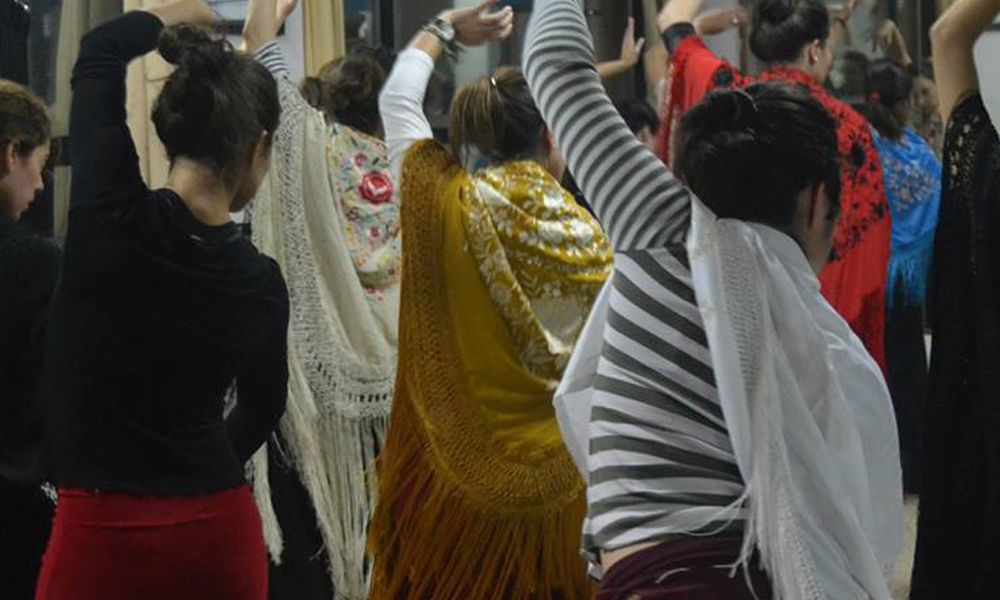
Afternoons are dedicated to extracurricular activities and homework. Some schools offer sports in the afternoons, but sports may also be practiced in local clubs. Exchange students in Spain have plenty of opportunities to experience new activities and meet Spanish teens outside of the classroom!
The High School exchange in Spain is not only about going to school and living with a Spanish host family: you will meet many new Spanish friends and continue to practice your favorite activities with them!
What will your daily life look like in Spain? You will wake up and have a light breakfast before going to school and starting classes at 8 am. After attending your first 3 hours of classes, you will take a break and eat a sandwich because lunchtime is at 3 pm only! You will chat with your Spanish classmates and maybe plan afternoon activities together! Go back to classes until 2 pm and then return home to have lunch with your host family.
The afternoon may be dedicated to practicing your favorite sport in a local club, but you will also have to study and do homework! Spend your evening and dinner with the other family members and get to know the Spanish way of life and popular culture from the inside. During the weekend, you will share time and activities with your host sisters or brothers and meet your new Spanish friends to go shopping or watch a movie!
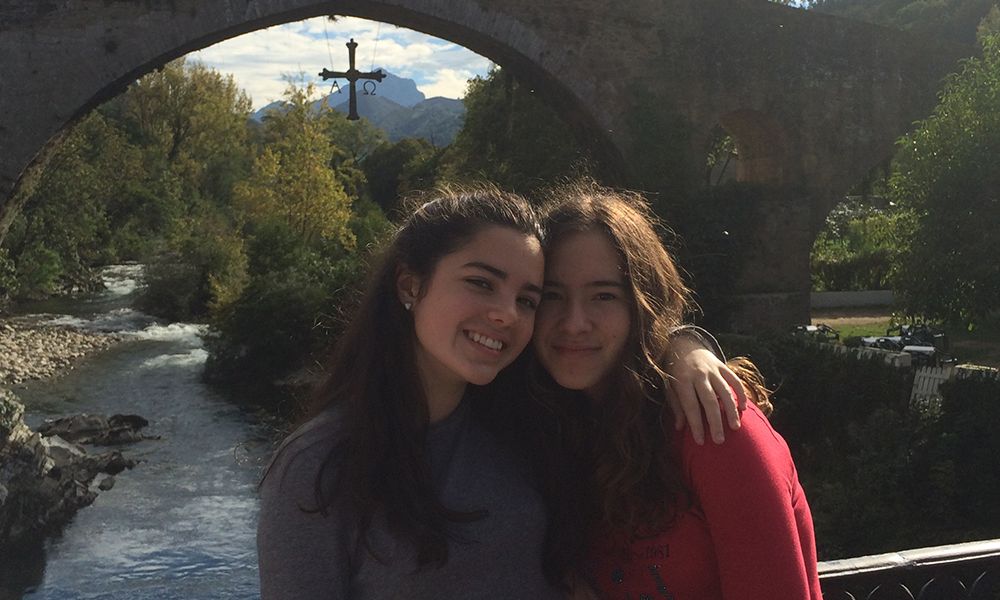
Living with a Spanish host family
Within this program, students are hosted by Spanish families. Spanish host families are carefully selected based on hosting conditions, motivations, and expectations. We match a student with a host family based on the host family and the student's application form. Prepare your host family letter and your pictures very carefully: this will help us to make the best match!
Spanish host families are known for being very welcoming and enthusiastic about getting to know the culture of our students. This is a real cultural exchange program in Spain.
Students are required to integrate with family activities such as trips and days out. It is also important that the student gets involved with housework responsibilities. Host families offer full-board accommodation and packed lunches during school days if needed.
International students not only experience life with the host family but also get to know the extended family: grandparents, cousins, etc.
The local coordinator is available anytime to support the host family or the student whenever needed during the high school exchange in Spain.
Program Dates 2027/2028:
Our High School exchange program in Spain provides international students with the opportunity to start a full school year, a trimester (3 months), or a semester (5 months) in September (or in January). You may also opt for a short-term homestay and high school in Spain (up to 10 weeks).
* Start dates for September intakes will depend on the region placed.
- Trimester: September 5th to December 22nd 2027 (all grades)
- Semester: January 7th 2028 to June 25th 2028 (only Grade 10 students)
- Academic year: September 5th 2027 to June 25th 2028 (all grades)
How to apply for your High School exchange program in Spain
The application to your exchange program in Spain is done in six stages:
1. An interview is carried out with you and your family to determine eligibility.
2. Once you complete the booking, we will send you the application forms that will need to be carefully filled out and must be sent back to us.
3. Once you are accepted into the program, we will issue the formal acceptance and start working on your placement.
4. Arrangements are made for your placement and communicated to you.
5. You determine your travel arrangements, and we organize your transfers upon your arrival.
Spanish Student Visa and Travel Requirements
A Spanish student visa is not available for this program due to recent visa restrictions.
- European Union citizens: you may study in a High School in Spain for 3 months, a semester, or a full year.
- Non-European citizens: you can study in a High School in Spain for 3 months only. Consult our dedicated program page.
High School exchange program in Spain 2027/2028
Prices are valid for September 2027 and January 2028 start dates.
* Price in Euros per participant.
Not included: Application Fees (65 EUR)
On offer:
- Term Abroad Spain
- Semester Abroad Spain
- School Year Abroad Spain
- Mini High School Experience Spain
- British Boarding school in Andalucía
- High School Summer Abroad Spain
💰 What's Included in the Price?
- Administration fees
- Host school placement and local orientation
- Host family accommodation with full board
- Airport pick-up and transfers to host family/boarding school, from the closest airport to the family
- Support, assistance and 24/7 Hotline during the whole program
🚫 What's Not Included?
- Round-trip international airfare
- Non compulsory insurances (luggage lost, flight delay etc.)
- Visa, passport and medical exam fees
- Private school extra fees, extra language courses
- Books, lockers, laboratories, yearbook, textbooks, school trips, class ring, letter jacket, student activities etc…
- Local transportation from and to school
- Extra activities such as sports, excursions, etc…
- Airport pick-up and transfers outside the dates indicated or in another airport
- Personal expenses and spending money
- Medical, Liability and Emergency Repatriation Insurance


A minimum of two years of Spanish language study (A2 level) are required to attend a High School exchange program in Spain.
Participants must show that they are mature enough to participate in the student exchange in Spain that requires:
- Interest in learning about Spanish language and culture
- Deep desire to integrate into a different family and actively share their everyday life
- Enthusiasm for improving Spanish language communication skills
- Willingness to make new friends in their Spanish local community
- An open and flexible attitude towards a school year in Spain
Frequently Asked Questions
website_faq_common_subtitle
Here are some tips for you:
1) Communicate! Please talk about everything and be open with your host family. For example, tell them about your school life, where you are going, and what time you will return. Make a point to discuss host family rules, and schedules (such as when you can take a bath) right away.
2) Ask Questions. When in doubt, ask your host family for help. You might not understand everything at first, but your host family wants to help. You might feel less independent in the beginning, but these feelings will go away eventually. Don’t hesitate, or feel it is impolite to ask many questions. This is normal.
3) Discuss Issues. Sometimes there will be small problems adjusting for you and your host family. It is important to talk about these frustrations even if they seem small. Always talk to your host family first about any problems. If you become sick, tell your host family right away.
4) Allow adjustment time. You may form an image of your host family within the first couple of days that isn’t accurate. Your host family might take you sightseeing, fix special foods, or be extra polite when you first arrive. Little by little, you and your host family will feel more comfortable around each other and act naturally.
5) Participate in Family Life. Don’t hide in your room. If you are feeling homesick, hiding in your room will only make it worse. Have fun with your host family, and share in evening or weekend activities.
6) Keep an Open Mind. Look at differences as new and fun experiences. This is your chance to try many new things that you might not be able to do in your home country. Take advantage of the opportunity!
7) Be polite and friendly. This is important. You might not talk very much with your family in your home country, but if you shut yourself off from your host family they will assume that you are homesick or unhappy. When you like something, be sure you tell them. A “thank you” and a smile can go a long way!
8) Help with Housework and Chores. Seriously, you would be surprised at how much an offer to do the dishes will mean to your host family.
Remember, your host family will also be nervous, especially if it is their first time hosting. They worry about whether you like the food or their family. If you are open and friendly, you will help to put them at ease. At the end of your stay, you will probably find that you do not want to leave!
Studying abroad in high school offers benefits that extend far beyond the classroom, shaping students academically, personally, and socially.
- Language development. Students develop and improve new language skills through full immersion in a foreign-language environment.
- Cultural immersion. Living abroad means immersing yourself in a new culture and an entirely different way of daily life.
- Independence. Navigating life in a new country builds self-reliance and confidence.
Broader perspective. Students gain a new outlook on their home country, their destination country, and the world at large, developing a deeper appreciation for diversity. - Lasting relationships. Living with a host family and attending a local high school creates opportunities to make friends and build international friendships that can last a lifetime.
Bottom line: A High School Abroad program delivers language gains, cultural immersion, personal growth, and lifelong international friendships, benefits that make the experience valuable well beyond the exchange year itself.
Yes. Making friends and building cultural understanding are core goals of every High School Abroad program, and extracurricular activities are one of the best ways to achieve both.
- School-based activities. Many host high schools offer clubs, sports teams, and other extracurricular programs where students can get involved alongside local classmates.
If your school doesn't offer your specific interest. Not every host school will have a club or program matching your particular hobby, but that's rarely a limitation in practice. - Community options. Your host town will typically have clubs, community facilities, and sports centers outside of school where you can keep developing your skills and interests.
- Building friendships. Whether through school clubs or community activities, these opportunities create natural, ongoing chances to build lasting friendships with local students.
Bottom line: Between school clubs and community resources in your host town, High School Abroad students have plenty of ways to stay active in their interests and form genuine, lasting friendships with local peers.
Packing thoughtfully for a High School Abroad program helps students settle in smoothly and stay prepared for both daily life and travel logistics.
- A gift for the host family. Not mandatory, but a small, modest gift that reflects your home country and culture is a thoughtful way to break the ice.
- Electronics and adapters. If your child is bringing electronic devices, check whether the destination country requires a plug adapter and pack one if so.
- Language tools. A small, two-way language dictionary is considered a must-have, along with a travel guide or map of the host city or area.
- Luggage. Students are responsible for handling their own luggage, so packing light is strongly recommended.
- Essentials to include. Passport and travel documents, school supplies, and a photo album from home are all worth packing. Checking the local weather in advance also helps your child pack appropriate clothing.
- What to keep in hand luggage. Any necessary medication for illness or ongoing treatment, acceptance letters, passport, visa documents, insurance certificate, host family contact details (or details of whoever is picking them up), the program's emergency phone number, electronics like a camera or music player, and any jewelry or glasses.
Bottom line: Smart packing for a High School Abroad program means traveling light, keeping critical documents and essentials in hand luggage, and bringing a few practical extras, like a dictionary and a small host-family gift, that make the transition abroad easier.
Students participating in a High School Abroad program are expected to follow a clear set of behavioral guidelines throughout their stay, designed to keep them safe and in good standing with their host family and school.
- Daily school attendance. Students must attend school every day for the duration of the program.
- Host family and school rules. Students are expected to follow the rules set by both their host family and their host school at all times.
- Prohibited activities. Students may not drive, smoke, drink alcohol, or use drugs at any point during their participation in the exchange program.
Bottom line: High School Abroad participants are held to consistent expectations, daily school attendance, respect for host family and school rules, and no driving, smoking, drinking, or drug use, for the full duration of their exchange.
The student will be helped by our local representative and his/her host family to visit a local doctor and get the necessary medical treatment. If hospitalization, surgery, or repatriation is needed, the insurance should be first informed.
If necessary, our team at the headquarters located in France, which delivers a 24-hour emergency service, 365 days a year, may assist you. The phone number of this service will be given to you before the student’s departure.
Please be sure to have a medical insurance. We can provide you with one, for an additional cost. Ask us for more information about the insurance policy!
Your child’s trip abroad will be a rewarding experience, but he/she has to be ready to change his/her way of life for some time and to adapt to the host family.
Here are some tips to check if your child is ready for this challenge:
- He/She is the one who wants to participate in the study abroad program. Never force your child to go abroad if he/she doesn’t want to! At best, he/she won’t enjoy his/her trip as much as if he/she had decided him/herself. At worst, he/she will be repelled by his/her language studies back home!
- He/She shows interest and curiosity about the language or the country he/she is going to visit.
- He/She is independent enough to be able to cope with problems that may occur (flight delays, loss of luggage, waiting time…), or with homesickness (has he/she already been far away from home? How did he/she cope with that?)
- He/She is mature enough. In some of our programs, supervision is high, and activities are planned all day long. But in others, students are less supervised and must be mature and responsible enough to behave according to the program’s rules and to find occupations.
If you are not sure if your child is ready or not, we can advise you! Meet the team of Nacel!
Homesickness may happen to everyone, even people who have already been abroad without having faced any problems before. To prevent homesickness, keep in touch with your child, but not too much/too often (see below), and follow our preparation tips. If it is your child’s first experience abroad, a short-term experience would probably be the best choice for you to make, so that your child can “test” himself/herself.
The purpose of most of our programs is the immersion in another country’s language and culture. During the first days, it is normal if your child feels a bit homesick, and too frequent communication with his/her natural parents could delay his/her integration into the host country.
You can suggest she/he get involved in local activities, clubs, and sports to help her/him make friends with similar interests.
In both programs, students are assigned to a host family and attend a local high school. The main difference is the duration of the program and whether the student returns with class certifications. The Nacel Homestay programs are usually shorter (up to 12 weeks) and do not provide class certifications. It is a pure cultural immersion program.
Nacel takes student safety very seriously. Every family presents criminal and police records, IDs, and recommendation letters. Most of our families are recommended by local schools or other host families. In addition, we visit each household to make sure that the conditions and area are adequate to receive international students.
Yes! You can read the reviews that parents and students have written about Nacel on Google, GoOverseas, and GoAbroad.
We can also introduce you to former students who can tell you about their experience and answer additional questions you might have.
For Nacel, the match with the host family is key. We use a matching system where we pair students and host families based on goals, interests, and hobbies. We understand that cultural differences can affect the relationship, so first we try to mediate and reach a consensus. However, when needed, students are placed with another host family.
No results found
Not ready to commit yet? Let us help you!