


Live in Argentina. Not as a tourist, but as a local.
Share Sunday asados with your host family, pass the mate around with new friends, and learn to say vos instead of tú. Enroll in an Argentine high school for a few weeks, a semester, or a full year, and discover a country where dinner starts at 10 p.m. and conversations last even longer. Your Spanish will improve because you're living it, not studying it from a textbook.
Next possible start dates: February 2027! Apply now!
Study in a local high school and live with an Argentinian host family
Exchange students make the most of their High School exchange in Argentina to discover its rich culture, a mix of Latin American and European influence, as well as its geographical diversity and wonderful natural environment. Our exchange students live with warm Argentinian host families, looking to share their everyday life with a foreign student.
We place our exchange students in Córdoba Province; they attend a local High School with their Argentinian classmates.
- You can study one semester, and up to a complete academic year at an Argentinian high school.
- You will live with Argentinian host families who will welcome you as a new family member.
- As soon as you arrive in the country, you will attend an orientation session with your local coordinator who will provide you with assistance and support throughout your program. We will keep your parents informed of your adventures in the country.
Your High School in Argentina
High schools in Argentina are well organized, have high academic standards, and offer a friendly and supportive environment.
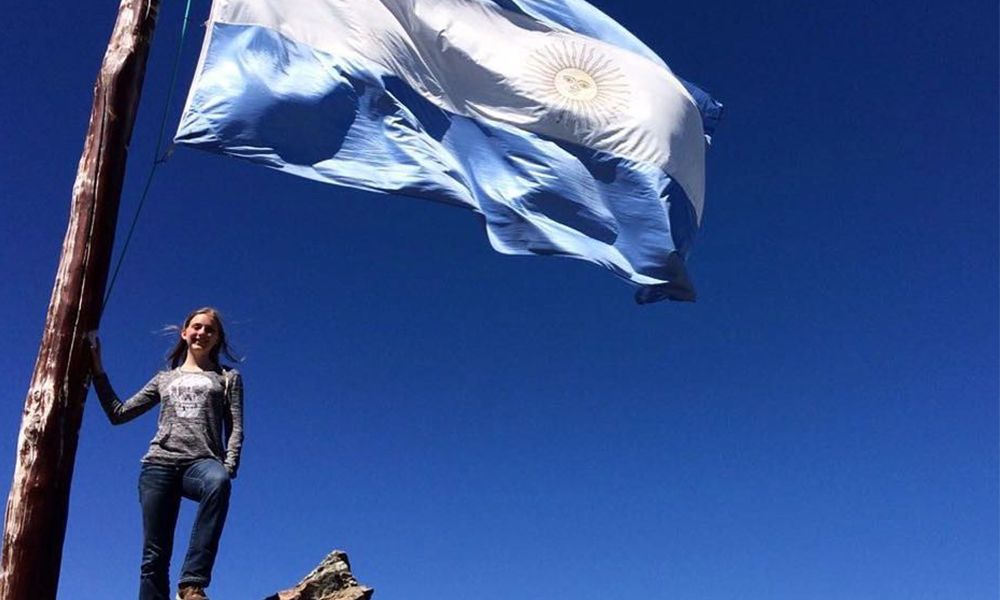
A typical day at an Argentine school begins before you even reach the classroom. You'll likely ride the bus or pedal your bike, and on some mornings your host mum or dad might drop you off. Then comes a moment that may surprise you: el saludo de la bandera. Students fall silent in the main hall as two of them raise the national flag, and in certain schools everyone joins in singing the anthem. Once the ceremony ends, everyone heads off to their classes.
The afternoon feels more relaxed. Once lunch is over, you're free to catch up on homework, take a break, or sign up for something you enjoy. Many teens fill their afternoons with English classes, theater, the gym, or a team sport. If you'd rather move to music, dance classes are everywhere, and tango is right at the top of the list.
Learn more about high school abroad in Argentina: school system, subjects, grades and daily life!
What can I expect from my exchange program in Argentina?
Our exchange students study in private schools or public schools in Argentina. Private schools are available on request at an additional cost.
Exchange students in Argentina enjoy their afternoons or mornings taking tango classes, Spanish courses, or practicing sports in various clubs.
Students attend an Orientation camp in Córdoba (semester and academic year only) and stay in a hotel with all exchange students and our staff. They learn more about the program and attend a Spanish course, so that they feel more comfortable when they join their host families and schools.
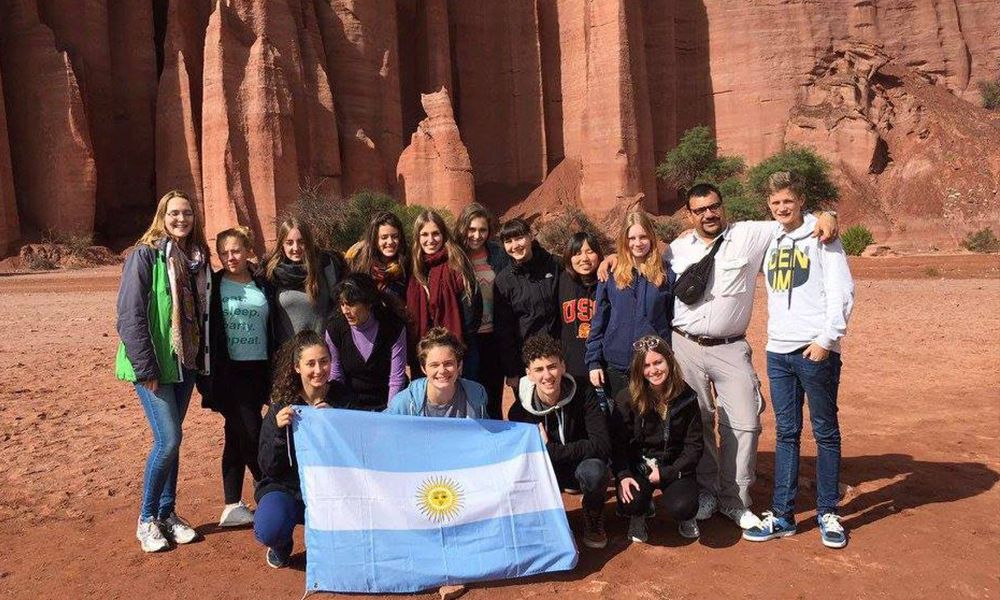
Our exchange students in Argentina may also be offered an excursion to Patagonia or Argentina’s Northwest during their stay : you can visit sub-Antarctic rainforests in Patagonia, tropical jungles in the northeast, mountains, sandy beaches, deserts, or the awesome “Iguazú” waterfalls! These trips usually take place during the months of October/ November to the South and March/April to the North. Don't miss this opportunity!
Student's experiences in Argentina
- High School Abroad in Argentina: your daily life in your Argentine school and host family
- Exchange students tell us about their High School Study Abroad in Argentina!
You may also be interested in...
An area selection in Argentina? Choose our Select High School exchange in Argentina.
A shorter experience? Choose our Homestay and school integration in Argentina (6 to 12 weeks)
Another Spanish-speaking country? We also offer various other Spanish-speaking High School exchange programs in:
Teenage life in Argentina includes extracurricular activities that Argentinean students attend in local clubs, such as sports, language courses, Arts, Music, Theater, gym, etc. You may find volleyball, basketball, soccer, music, arts, or handicrafts at clubs in your host town.
We encourage you to sign up for extracurricular activities: you make new friends, practice Spanish in a different environment than the classroom, stay fit and busy, and build strong relationships with teens from different backgrounds. This is an additional value to your exchange program in Argentina.
During your high school exchange in Argentina, you will live with a vetted host family, providing all meals (breakfast, lunch, and dinner).
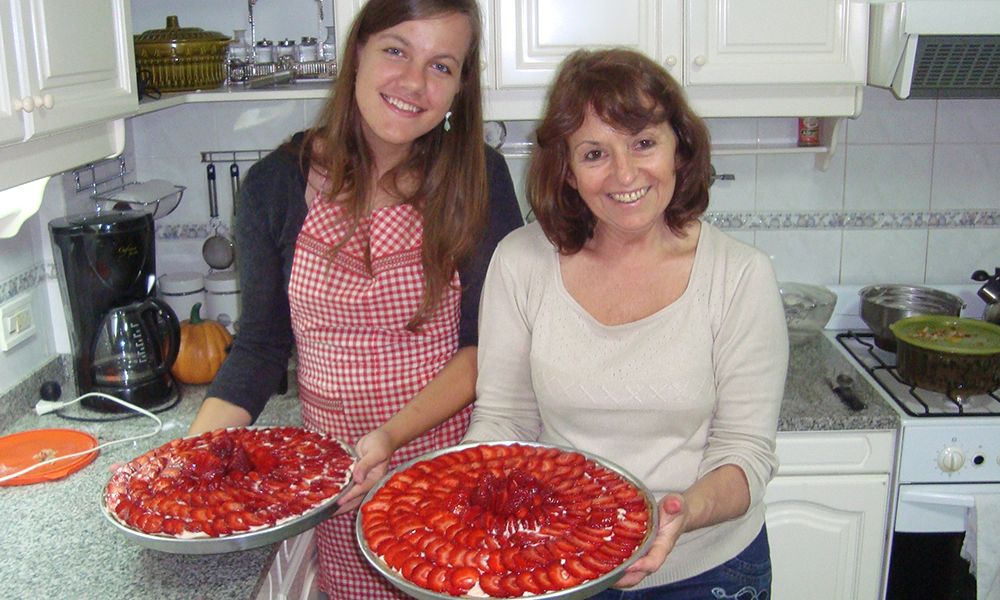
Your journey starts by meeting your Argentinian host family, who opens their home and heart to you. Your host family does not just host you; they provide you with room, board, family life, and support! They introduce you to the family culture and Argentinian life and are your passport to this immersive adventure!
Typical Argentine families consist of a mother, father, and 1-2 children. Both parents typically work from 8 am to 6/7 pm. Families have dinner together and follow eating patterns different from what you are used to, with lunch at 1-2 pm and dinner at 9:30-10 pm. They also enjoy an afternoon snack called "merienda" around 6 pm.
In Argentina, warmth is a way of life. Friends and strangers alike greet each other with a kiss on the cheek or a big hug, and no one is ever in a hurry to say goodbye. Family sits at the center of everything: cousins, grandparents, aunts, and uncles gather often, and a long table full of people is the most natural thing in the world.
Your time in Argentina will be full of moments you couldn't plan if you tried. Learn to sip mate the right way (and never touch the bombilla!), pull up a chair at a family asado, and master the art of the cheek kiss hello. Discover tango in the city where it was born, and say yes when friends invite you out at the last minute, because the best plans in Argentina are usually the ones nobody made ahead of time.
They are your family away from home and guide you throughout the experience with the support of your local coordinator! You create memories of a lifetime and build a strong relationship with your Argentinian family for the rest of your life.
Travel & Orientation
Once you land in Argentina, you participate in a local orientation camp in Córdoba. You meet the support staff who will take care of you during your stay in Argentina and learn useful information to be successful in your program.
Your local coordinator remains in touch with you throughout your stay in Argentina and is a support worker: you can rely on this staff member to help you at any time during your exchange in Argentina.
Program Dates 2027:
Term:
- February 25th to May 20th 2027
- July 22nd to October 20th 2027
Semester:
- February 25th to July 8th 2027
- July 22nd to December 17th 2027
School year:
- February 25th to December 17th 2027
- July 22nd 2027 to June 19th 2028
Enrolling in our High School Exchange Program in Argentina is a straightforward and exciting process!
Follow our step-by-step application guide:
1. Learn more about our Study Abroad Programs in Argentina: Carefully read our Program Booklet, available on request, have a look at country information, and be inspired by former participants of the High School Study Abroad in Argentina. Compare durations and start dates.
2. Contact Us: Get in touch with our dedicated Advisor to ask questions and even schedule a call to discuss the program further. We are here to clear any doubts, answer your questions, discuss your needs and preferences, and guide you throughout the process.
3. Book your Program: Ready to join us on this immersive journey in Argentina? Book your program online and receive a login and password to prepare your application package.
4. Prepare Your Application Package: Complete your application package. It usually includes an application form, a host family letter, school records, medical records, and sometimes an introduction video.
5. Attend an Interview: Upon receiving your application package, we schedule an interview with you to get to know you better and learn more about your motivation, expectations, and preferences (see Select program Argentina) for your exchange program in Argentina. We also answer any remaining questions you may have.
6. Receive your Program Acceptance: You submit your application package, and we assess it. If you are accepted into the High School exchange program in Argentina, you receive a letter of acceptance and a deposit invoice. Payment of your acceptance deposit confirms your commitment to attend the program.
7. Placement Process and Ongoing Orientation: While our local in-country team works on securing the most suitable school and family placement for you in Argentina, you receive from us ongoing program information, orientation on Argentinian family life, introduction to the Argentine school system, and pre-departure information.
8. Apply for your Argentinean Visa: If you need a visa to study in Argentina, our team provides you with visa guidance and all necessary documentation to apply for your Argentinean Student visa.
9. Work on your Travel Arrangements: Once you have your visa on your passport, it's essential to plan your arrival and departure according to the program dates and destinations. Book your flight accordingly, and we will arrange your pick-up and transfer. Do not hesitate to consult your Advisor for guidance!
10. Departure: Prepare your suitcase and check in! Our in-country support team welcomes you in Argentina and provides you with assistance during the first few days to make sure you settle in smoothly! Rely on your local coordinator and Nacel support team to support you throughout your student exchange in Argentina.
Begin your journey with Nacel now: take the first step on this incredible adventure.
Visa information: To apply for the "365 days Intercambio Cultural" student visa, contact your local Argentine Embassy or Consulate to confirm the required documents, and start about two months before your arrival date, since the process can take several months. To learn more, visit the Embassy of Argentina website.
High School exchange in Argentina 2027
Prices valid for February and July 2027 intakes.
* Price in US Dollars per participant.
** July to June on request. For students going from July to June, there will be an additional cost of about $50 a month for Private School Tuition.
Not included: Application Fees (65 EUR)
High School Abroad in Argentina:
- Semester Abroad Argentina
- School Year Abroad Argentina
- High School Summer Abroad Argentina
💰 What's Included in the Price?
- 20+ years of experience providing high-quality study-abroad programs
- Processing of student applications
- Host school placement and tuition fees (except in case of private schools charging extra fees)
- Host family accommodation with full board (meals eaten at home)
- Airport pick-up and transfer from Cordoba airport on arrival to the orientation camp (return transfer to Cordoba airport depends on the host family’s location)
- Transfer from the orientation camp to the host family if they live less than 200km from Cordoba
- Orientation session on arrival, including a 15-hour Spanish course
- Necessary documentation for the student to obtain a student visa for Argentina and visa guidance
- Regular Progress Feedback
- Access to an in-country support team, and Nacel Student Support staff
- Support, assistance, and 24/7 Hotline
🚫 What's Not Included?
- Round-trip international airfare
- Non compulsory insurances (luggage lost, flight delay etc.)
- Visa (Programs for 2, 3, and 5 months only require Tourist Visa), passport, immigration and medical exam fees
- Extra activities organized by the school or others
- Extra language courses, extra excursions
- Local transportation (eg: to and from school)
- Transportation from Cordoba (after orientation camp) to the host family if the host family is located more than 200km from Cordoba
- School supplies and calculators, school books, school and sport uniforms, meals taken at school, school fees in case of a private school
- Personal expenses and spending money
- Return transfer
- Medical, Liability and Emergency Repatriation Insurance


For a High School exchange program in Argentina, you:
- must be between 14 to 18 years old. 19-year-old students and graduates may be considered on a case-by-case basis, inquire!
- need to be interviewed by our counselor before being accepted for a High School Program in Argentina
- need to have a minimum of one to two years of Spanish study and good academic results
- must be secondary school students or young University/College students.
- can take a gap year in Argentina as an exchange student
Motivation and enthusiasm are absolute requirements for your foreign exchange student in Argentina!
Frequently Asked Questions
website_faq_common_subtitle
There are a few tips that will help your child feeling confident and secured abroad. Here are some ideas for him/her:
- Self-learning: try to learn usual expressions you may have to use in your daily life, do thematic wordlists (food, entertainment, clothes…).
- Try to read a book or see a movie in original version, with subtitles in the language too: this is a good training to improve your hearing skills and this will prepare you to your life abroad.
- Collect information about the country or area you will be living in: How is the climate there?
What activities can be done? Are there places to visit? If you are doing a Tour, check the different places you will go to! These tips will leave you with many ideas of outside-of-the-classroom activities and help you to plan your trip so you won’t miss a visit!
Host family quality is one of the biggest factors in a successful High School Abroad experience, so Nacel puts every prospective family through a careful vetting process before matching them with a student.
- Selection process. Local coordinators personally interview and visit each prospective host family before approving them to host an exchange student.
- What host families are like. Approved families are warm, welcoming, and open-minded; proud to share their lifestyle and language; willing to fully include an exchange student in their family and community; and aware that today's youth need to grow into world citizens.
- Room arrangements. Students may be placed in an individual room or a shared room, depending on the destination and program. Students of different sexes are never placed in the same room, and roommates sharing a room are generally no more than 4 years apart in age.
- Independence expectations. Host families are not responsible for organizing activities or entertainment for the student. Exchange students need their own spending money and should be mature enough to occupy themselves and engage with their host community independently.
Bottom line: Nacel's host families are personally vetted for warmth and openness, but parents should prepare their child for a degree of independence, since host families support and welcome students without acting as full-time activity planners.
Here are some tips for you:
1) Communicate! Please talk about everything and be open with your host family. For example, tell them about your school life, where you are going, and what time you will return. Make a point to discuss host family rules, and schedules (such as when you can take a bath) right away.
2) Ask Questions. When in doubt, ask your host family for help. You might not understand everything at first, but your host family wants to help. You might feel less independent in the beginning, but these feelings will go away eventually. Don’t hesitate, or feel it is impolite to ask many questions. This is normal.
3) Discuss Issues. Sometimes there will be small problems adjusting for you and your host family. It is important to talk about these frustrations even if they seem small. Always talk to your host family first about any problems. If you become sick, tell your host family right away.
4) Allow adjustment time. You may form an image of your host family within the first couple of days that isn’t accurate. Your host family might take you sightseeing, fix special foods, or be extra polite when you first arrive. Little by little, you and your host family will feel more comfortable around each other and act naturally.
5) Participate in Family Life. Don’t hide in your room. If you are feeling homesick, hiding in your room will only make it worse. Have fun with your host family, and share in evening or weekend activities.
6) Keep an Open Mind. Look at differences as new and fun experiences. This is your chance to try many new things that you might not be able to do in your home country. Take advantage of the opportunity!
7) Be polite and friendly. This is important. You might not talk very much with your family in your home country, but if you shut yourself off from your host family they will assume that you are homesick or unhappy. When you like something, be sure you tell them. A “thank you” and a smile can go a long way!
8) Help with Housework and Chores. Seriously, you would be surprised at how much an offer to do the dishes will mean to your host family.
Remember, your host family will also be nervous, especially if it is their first time hosting. They worry about whether you like the food or their family. If you are open and friendly, you will help to put them at ease. At the end of your stay, you will probably find that you do not want to leave!
Yes. Making friends and building cultural understanding are core goals of every High School Abroad program, and extracurricular activities are one of the best ways to achieve both.
- School-based activities. Many host high schools offer clubs, sports teams, and other extracurricular programs where students can get involved alongside local classmates.
If your school doesn't offer your specific interest. Not every host school will have a club or program matching your particular hobby, but that's rarely a limitation in practice. - Community options. Your host town will typically have clubs, community facilities, and sports centers outside of school where you can keep developing your skills and interests.
- Building friendships. Whether through school clubs or community activities, these opportunities create natural, ongoing chances to build lasting friendships with local students.
Bottom line: Between school clubs and community resources in your host town, High School Abroad students have plenty of ways to stay active in their interests and form genuine, lasting friendships with local peers.
No. The exchange students of the Argentina High School Program must attend the same subjects that are compulsory for local students.
Typical Argentinian families consist of a mother, a father, and 1-2 children. Both parents typically work from 8 am to 6/7 pm. Families have dinner together and follow eating patterns different from Northern countries, with lunch at 1-2 pm and dinner at 9:30-10 pm. They also enjoy an afternoon snack called "merienda" around 6 pm.
Exchange students should use Cordoba Airport (COR) when arriving in Argentina.
Argentinian culture is characterized by warm and affectionate people who greet each other with kisses on the cheeks and hugs. The society has strong family bonds with frequent extended family gatherings and a close connection to traditions like mate drinking, football, and barbecues.
Argentina offers complete religious freedom. While Roman Catholicism is the official religion, the country embraces multiple religious practices including Protestant, Jewish, Muslim, and Orthodox faiths. Public education remains secular, with religion not part of the school curriculum.
Independent travel within Argentina is restricted for exchange students who are participating in the High School program. Exceptional travel requires a signed parental permission letter, with acknowledgment that Nacel and the provider are not responsible for any incidents.
Exchange students can potentially participate in different experiences including learning to drink mate, participating in family traditions like asados (barbecues), understanding local greeting customs, experiencing tango culture, and joining spontaneous social activities.
Packing thoughtfully for a High School Abroad program helps students settle in smoothly and stay prepared for both daily life and travel logistics.
- A gift for the host family. Not mandatory, but a small, modest gift that reflects your home country and culture is a thoughtful way to break the ice.
- Electronics and adapters. If your child is bringing electronic devices, check whether the destination country requires a plug adapter and pack one if so.
- Language tools. A small, two-way language dictionary is considered a must-have, along with a travel guide or map of the host city or area.
- Luggage. Students are responsible for handling their own luggage, so packing light is strongly recommended.
- Essentials to include. Passport and travel documents, school supplies, and a photo album from home are all worth packing. Checking the local weather in advance also helps your child pack appropriate clothing.
- What to keep in hand luggage. Any necessary medication for illness or ongoing treatment, acceptance letters, passport, visa documents, insurance certificate, host family contact details (or details of whoever is picking them up), the program's emergency phone number, electronics like a camera or music player, and any jewelry or glasses.
Bottom line: Smart packing for a High School Abroad program means traveling light, keeping critical documents and essentials in hand luggage, and bringing a few practical extras, like a dictionary and a small host-family gift, that make the transition abroad easier.
Students participating in a High School Abroad program are expected to follow a clear set of behavioral guidelines throughout their stay, designed to keep them safe and in good standing with their host family and school.
- Daily school attendance. Students must attend school every day for the duration of the program.
- Host family and school rules. Students are expected to follow the rules set by both their host family and their host school at all times.
- Prohibited activities. Students may not drive, smoke, drink alcohol, or use drugs at any point during their participation in the exchange program.
Bottom line: High School Abroad participants are held to consistent expectations, daily school attendance, respect for host family and school rules, and no driving, smoking, drinking, or drug use, for the full duration of their exchange.
The student will be helped by our local representative and his/her host family to visit a local doctor and get the necessary medical treatment. If hospitalization, surgery, or repatriation is needed, the insurance should be first informed.
If necessary, our team at the headquarters located in France, which delivers a 24-hour emergency service, 365 days a year, may assist you. The phone number of this service will be given to you before the student’s departure.
Please be sure to have a medical insurance. We can provide you with one, for an additional cost. Ask us for more information about the insurance policy!
Homesickness may happen to everyone, even people who have already been abroad without having faced any problems before. To prevent homesickness, keep in touch with your child, but not too much/too often (see below), and follow our preparation tips. If it is your child’s first experience abroad, a short-term experience would probably be the best choice for you to make, so that your child can “test” himself/herself.
The purpose of most of our programs is the immersion in another country’s language and culture. During the first days, it is normal if your child feels a bit homesick, and too frequent communication with his/her natural parents could delay his/her integration into the host country.
You can suggest she/he get involved in local activities, clubs, and sports to help her/him make friends with similar interests.
Yes. Every student traveling for the High school program in Argentina is assigned a Local Coordinator (LC), who will be in close contact with them during their program. The LC supervises, follows up, and can help if there is an emergency with the students.
Students traveling with Nacel for the High school program in Argentina attend local public and private schools, and since they are placed in Córdoba, access to international students is limited. This allows them to improve their Spanish much faster and really get immersed in the local culture and traditions.
No. We believe placing students with the correct Host family is Key. So we use a system where host families and students are matched based on common goals, hobbies, and interests. Students receive information about their assigned host family before traveling so they can contact them in advance and stablish a relationship with them.
In both programs, students are assigned to a host family and attend a local high school. The main difference is the duration of the program and whether the student returns with class certifications. The Nacel Homestay programs are usually shorter (up to 12 weeks) and do not provide class certifications. It is a pure cultural immersion program.
Nacel takes student safety very seriously. Every family presents criminal and police records, IDs, and recommendation letters. Most of our families are recommended by local schools or other host families. In addition, we visit each household to make sure that the conditions and area are adequate to receive international students.
Yes! You can read the reviews that parents and students have written about Nacel on Google, GoOverseas, and GoAbroad.
We can also introduce you to former students who can tell you about their experience and answer additional questions you might have.
For Nacel, the match with the host family is key. We use a matching system where we pair students and host families based on goals, interests, and hobbies. We understand that cultural differences can affect the relationship, so first we try to mediate and reach a consensus. However, when needed, students are placed with another host family.
No results found