






Live in Christchurch. Not as a tourist, but as a Kiwi student.
Move in with a New Zealand host family, enroll in a Christchurch high school, and spend a trimester, semester, or full school year immersed in everyday Kiwi life. Choose a High School Study Abroad in New Zealand.
Next possible start dates: January 2027! Apply now!
What could your school days look like on the other side of the world? In New Zealand, you could be sharing classes with Kiwi teenagers, trying a new sport after school and getting to know your host family over dinner. Beyond the classroom, mountains, beautiful coastlines and outdoor adventures offer plenty to discover. Studying here is also an opportunity to learn about Māori heritage and the diverse communities that shape life in New Zealand. For high school students, it’s a chance to build confidence in English, form friendships and find your place in a different way of life.
Nacel's Classic High School Exchange in New Zealand is a cultural immersion program for students aged 13 to 18 who have studied English for at least two years (native English speakers are welcome too). Students attend a co-educational state high school in Christchurch, the largest city on New Zealand's South Island, and live with a host family on full board. The school has about 2300 local students and around 75 international students, and every exchange student receives local support and 24/7 emergency assistance.
Be an exchange student in Christchurch, New Zealand
New Zealand is home to extreme sports, spectacular scenery, friendly people and world-class education. The school is well known throughout New Zealand for academic excellence and for its arts and music programs. It also places a strong emphasis on outdoor education (tramping, kayaking, climbing and snow caving).
What should I expect from my school year in New Zealand?
During your exchange you will:
- improve your English quickly, at school and at the dinner table,
- live like a local, with a host family,
- try something new every season, with kayaking, rock climbing, snowcraft, and mountain biking built into the school year,
- become more independent, confident, and culturally aware.
Exchange students are fully integrated into school life. They join sports teams, music groups, cultural groups, and school and community events, as well as special activities for international students.
Subjects, grades, and academic credits
Before enrolling, meet with your school counselor at home to find out how your school or education authority will recognize a study abroad year. Requirements vary, so confirm this early.
Your exchange in New Zealand comes with a different seasonal rhythm. Located in the Southern Hemisphere, the country enjoys summer when the Northern Hemisphere is in winter, so keep this in mind when planning your time abroad.
- What you'll study. Students typically take English plus five subjects of their choice. From Year 12, they can specialize in Arts, Sciences, Foreign Languages (French and Spanish), Social Sciences, or Technology. Exchange students are generally placed in Year 12 or Year 13, depending on their experience and English level. Specialist classrooms for science, technology, and computing are available, along with a well-resourced library.
- English support. Students who need it receive 4 to 10 hours of ESL tuition per week.
- Qualifications. Year 13 is the graduation year, with University Entrance exams in November. A full academic year is required to earn New Zealand qualifications. Exchange students are eligible for the exams but usually don't take them, since they carry entry fees.
- Please note. Grade placement, transfer of credits, and a diploma are not guaranteed. These decisions rest with the education authorities in your home country and in New Zealand. Some students may need to repeat a grade at home, so we encourage you to clarify the process before departure. Your Nacel counselor can guide you.
- If you don't need academic credit, that's fine too. A year in New Zealand builds language skills, independence, and international experience that strengthen your academic and professional profile.
School uniforms and daily life
Students are required to wear a school uniform. The school year usually starts in late January or early February and finishes in December. Classes generally run from around 8:45 am to 3:30 pm, Monday to Friday. The year has four terms, with school holidays between them.
Study Abroad in Christchurch
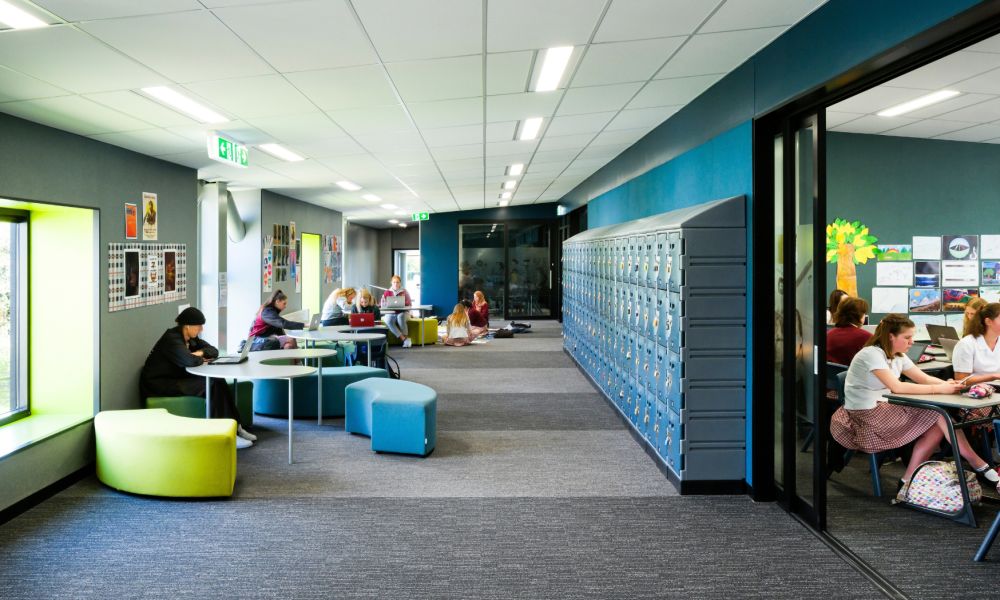
The College in Christchurch is a large school with extensive grounds and buildings, several grass playing fields, tennis/netball courts and a gymnasium that provide an excellent range of physical activities.
Key features:
- A real school community. Rock bands, orchestras, jazz, dance, and local and national sporting competitions are part of school culture. Choose from dozens of sports, from rugby and netball to rowing and skiing, plus music, drama, debating, photography, and Māori and Pasifika culture groups.
- A comfortable home. Each student has their own furnished, heated bedroom, three meals a day, and regular laundry. In return, students adapt to family routines and join in family life.
- A smooth start. You're met at Christchurch Airport and transferred to your host family. Before classes begin, you attend a school orientation and meet senior teachers to plan your courses.
- A strong support network. A school homestay coordinator matches students with families and resolves issues.
A safe, welcoming city. Christchurch is a clean, green city of 320 000 inhabitants with parks, beaches, walking and mountain biking tracks, and ski fields within reach.
Who is the Classic high school exchange in New Zealand for?
This program may be a good choice for students who:
- love the outdoors and an active lifestyle,
- want to join school life through sports, music, or the arts,
- are flexible and happy to adapt to a host family's routines,
- want an immersive experience in a large, safe city with easy access to nature.
Student experiences in Christchurch
Imagine starting your day with breakfast at your host family's table, walking to school with new friends, and spending weekends kayaking, climbing, or exploring the South Island. Over time, nervousness becomes confidence, and Christchurch starts to feel like home.
"Now, when I think about New Zealand, I feel that the school was a very kind and relaxing place. I remember that many people helped me with a smile. It was a really comfortable place for me, and now I’m feeling thankful to my class teacher, international teacher, Kiwi friends, international friends, my host family, and all the people I met in New Zealand. If I have a chance, I’m thinking that I want to go back to Christchurch someday." Katsumi, from Japan



The school offers an incredible wide choice of sports, music and arts activities!
Sports available at school:
- archery,
- athletics,
- badminton,
- basketball,
- boxing,
- chess,
- cricket,
- cross-country road race,
- cycling,
- fencing,
- frisbee,
- football,
- futsal,
- golf,
- gymnastics,
- handball,
- hockey,
- ice hockey,
- indoor netball,
- indoor football,
- karate,
- mountain biking,
- orienteering,
- polo,
- rock climbing,
- rowing,
- rugby,
- shooting,
- skiing & snowboarding,
- softball,
- squash,
- swimming,
- tennis,
- touch rugby,
- trampoline,
- triathlon,
- volleyball,
- yoga.
Music and Performing arts:
- Brass Ensemble,
- Boys Barbershop Chorus,
- Boys Barbershop Quartet,
- Chamber Music,
- Choir,
- Chorale Concert Band,
- Girls Barbershop
- Chorus,
- Girls Barbershop Quartet,
- Irish Band,
- Jazz Band,
- Orchestra ,
- Percussion Group,
- Recorder Ensemble,
- Rock Bands,
- Saxophone Ensemble,
- Stage Band,
- Conchestra,
- Jazz Ensemble.
During your High School Study Abroad in New Zealand and live with a host family, providing full board (breakfast, lunch and dinner).
Our host families usually live within walking distance to the school.
Meals in your host family: Sharing meals with your host family is a great way to learn about life in New Zealand. You might enjoy fresh vegetables, meat and dairy products, as well as popular dishes like fish and chips or roast dinners. Curries and stir-fries are common too, thanks to the country’s many cultures. You may also discover hāngī, a traditional Māori way of cooking food slowly in an oven dug into the ground.
TERMS 2027:
Term 1 Tuesday 2 February - Friday 9 April
Term 2 Tuesday 27 April - Friday 2 July
Term 3 Monday 19 July - Friday 24 September
Term 4 Monday 11 October - Friday 17 December
A Semester is equivalent to 2 terms (Term 1+ Term 2 / Term 3 + Term 4)
An Academic year is equivalent to all 4 terms.
How to Apply for Your High School Exchange Program in New Zealand
Start planning your high school exchange in New Zealand at least 6 months before departure. This gives you time to explore your options with a Nacel counsellor, prepare your application, and complete the placement and visa formalities.
We recommend submitting your complete application 5 to 6 months before your intended arrival. Your counsellor will confirm available starting dates and the deadline for your chosen program.
- Complete the online booking form. A Nacel counsellor will contact you to discuss your plans and explain the next steps.
- Prepare your application documents. You will receive personal login details to access your digital application space and upload the required information.
- Receive feedback on your application. Your counsellor will review your completed file and guide you through the acceptance and school placement process.
- Organise your visa and travel arrangements.Once the necessary supporting documents are available, you can proceed with your visa application, if required.
Have specific dietary or health needs? Please discuss any dietary requirements, existing medical conditions, or mental health needs with us before applying so we can assess the support available.
Student Visa and entry requirements for New Zealand
Your nationality, program length, and exchange arrangements determine which visa or entry permission you need to study in New Zealand.
If you require a student visa, Immigration New Zealand recommends applying at least 3 months before your intended travel date. Preparing a complete application early helps reduce the risk of delays affecting your departure.
Your Nacel counsellor will explain the program documentation available to support your application and help you prepare for the administrative steps ahead. Students and their families are responsible for submitting the visa application meeting immigration requirements and paying the applicable fees.
High School exchange in New Zealand 2027
Prices are valid for any program starting in 2027.
* Price in New Zealand Dollars per participant. Invoice will be issued in USD.
Not included : Application Fees (65 EUR)
On offer:
- Term Abroad New Zealand
- Semester Abroad New Zealand
- School Year Abroad New Zealand
- High School Summer Abroad New Zealand
💰 What's Included in the Price?
- Administration fees
- School registration and tuition fees (Government Levy), text books loaned
- Host family accommodation with full board (packed lunch is taken to school) and pastoral care
- Airport pick-up and transfer on arrival and departure
- Support, assistance and 24/7 Hotline during the whole program
- Uniform rental - 150 NZD per term (new uniform: extra cost)
- Medical Insurance provided by the school.
🚫 What's Not Included?
- Round-trip international airfare
- Non compulsory insurances (luggage lost, flight delay etc.)
- Visa, passport and medical exam fees
- Extra activities organized by the school and others
- Field trips, subject field studies, subject material fees, examination entry fees, sports activities, course materials, stationery and note keeping files, Outdoor Education Fee
- Local transportation from and to school
- Extra language courses
- Personal expenses and spending money
- Liability and Emergency Repatriation Insurance.


Exchange students must be interviewed in their home country before being accepted for a High School exchange program in Christchurch (preferably in English).
A minimum of two years of English study and good academic results are required to study in New Zealand.
Frequently Asked Questions
website_faq_common_subtitle
In both programs, students are assigned to a host family and attend a local high school. The main difference is the duration of the program and whether the student returns with class certifications. The Nacel Homestay programs are usually shorter (up to 12 weeks) and do not provide class certifications. It is a pure cultural immersion program.
Nacel takes student safety very seriously. Every family presents criminal and police records, IDs, and recommendation letters. Most of our families are recommended by local schools or other host families. In addition, we visit each household to make sure that the conditions and area are adequate to receive international students.
Yes! You can read the reviews that parents and students have written about Nacel on Google, GoOverseas, and GoAbroad.
We can also introduce you to former students who can tell you about their experience and answer additional questions you might have.
For Nacel, the match with the host family is key. We use a matching system where we pair students and host families based on goals, interests, and hobbies. We understand that cultural differences can affect the relationship, so first we try to mediate and reach a consensus. However, when needed, students are placed with another host family.
No results found