



Ready to speak Spanish with real confidence? Spend a trimester, a semester or a full school year in Chile. Your Spanish improves because you use it every day: at the dinner table, in class, at clubs and on weekends with new friends.
You'll live with a welcoming host family, attend a local high school and make friends with Chilean teens, all while exploring a country that stretches from desert to glaciers.
Next possible start dates: January 2027! Apply now!
Live like a Chilean teen: local High School and Host Family
Live with a Chilean family, go to school with Chilean classmates and join in everyday life as one of them. Nacel's exchange programs in Chile place you in a local high school and a welcoming home. You'll share family meals, make friends in class and learn Spanish the way it's really spoken.
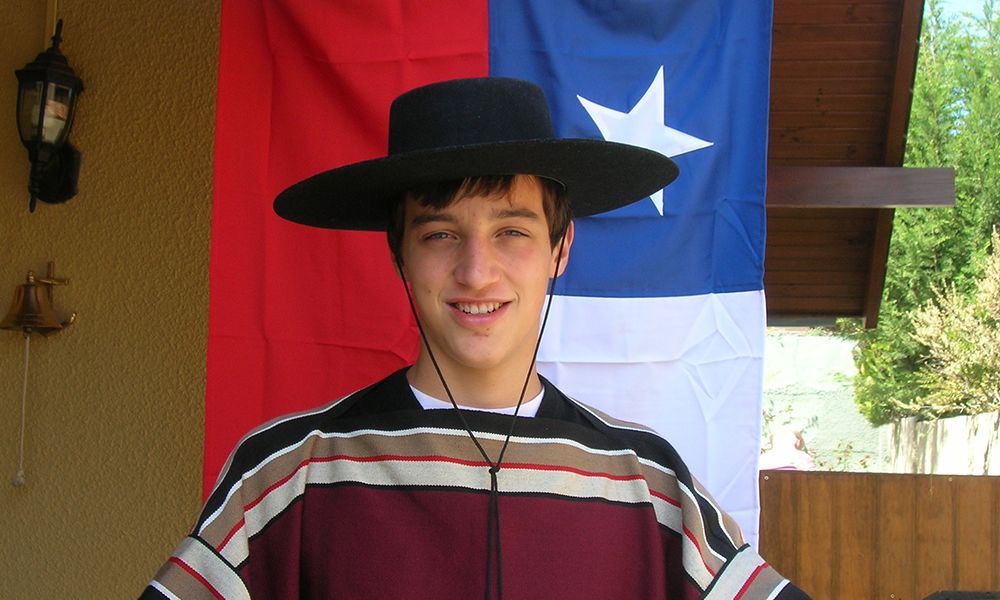
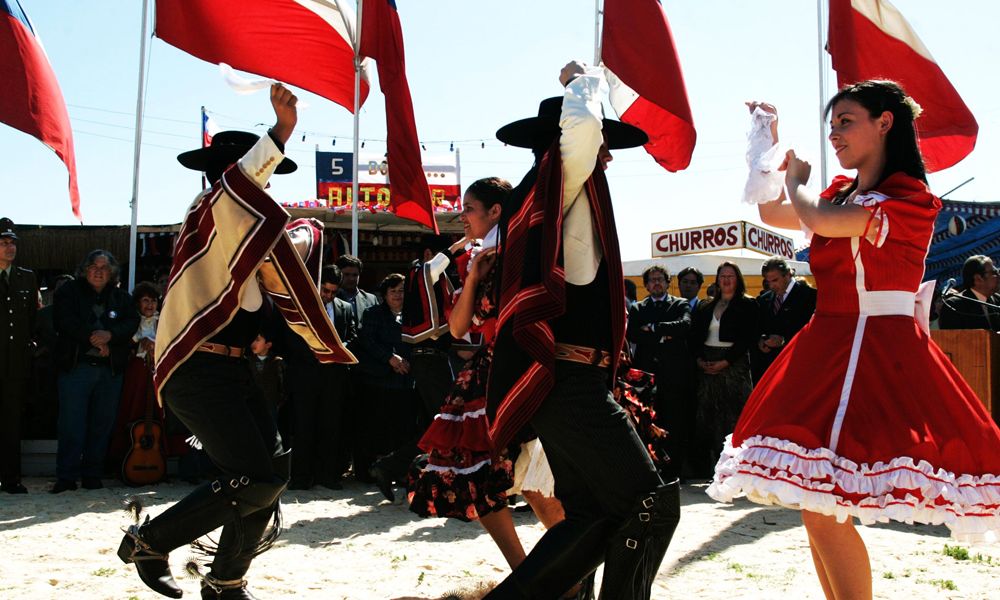
Chilean culture blends Latin American warmth with a strong European influence, which you'll notice in the country's art, architecture and music. Chile is also one of the most geographically varied countries in the world. It stretches about 4,300 km, from the Atacama Desert in the north to glaciers in the south. Depending on where you're placed and what you explore, you could experience desert, coastline, mountains, vineyards or lakes.
What to expect from your high school exchange in Chile
- Study at a local Chilean school. You'll attend a selected private high school alongside your Chilean classmates, often with your host brother or sister. Choose a trimester, a semester or a full academic year.
- Live with a Chilean host family. Your family welcomes you as one of their own, provides all your meals at home and introduces you to everyday Chilean life.
- Get support from day one. After you arrive, your local coordinator gives you an orientation and stays in touch throughout your stay, so you always have someone to turn to. We also keep your parents updated on your progress.
Your Chilean High School
Subjects and Curriculum
General basic education is compulsory and lasts for eight years, divided into two cycles of 4 years each. Secondary education (Educación media) lasts for four years. Around 13 to 15 different subjects are offered during each school year, such as:
- Spanish,
- Math,
- Economics,
- English,
- Biology,
- Physics,
- Chemistry,
- Government,
- Philosophy,
- Sports,
- Algebra, etc.
Grades 9 and 10 are standardized. From Grade 11 though (Tercero Medio) Chilean students choose to focus more on sciences or humanities. In this case they focus on:
- either Maths / Physics / Biology / Chemistry
- or Literature / Philosophy / History.
School Hours and Uniform
- Exchange students are placed in selected private high schools. The average size of schools varies from 400 to 1,200 students; schools include all levels (1st to 12th grade).
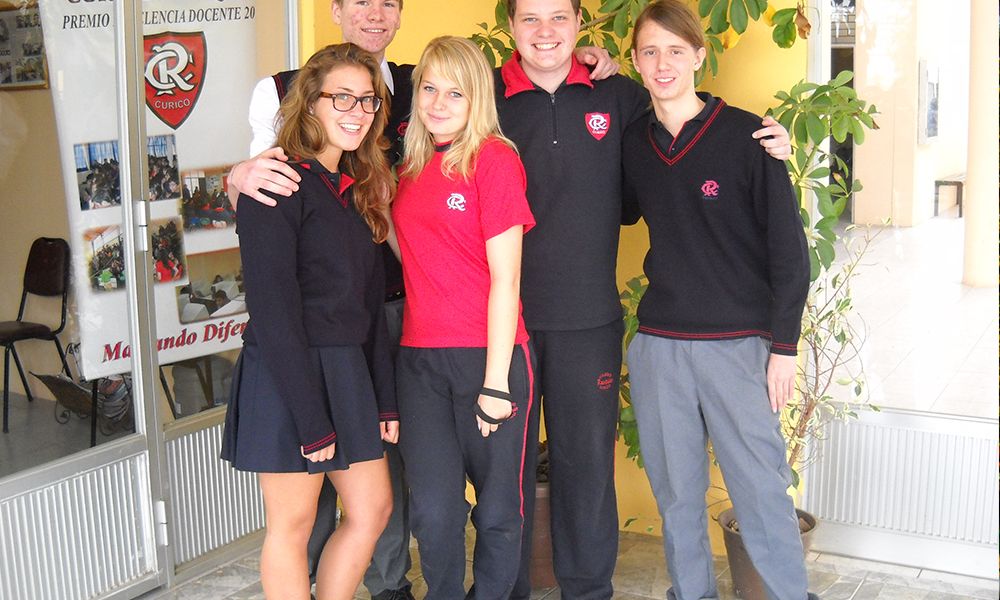
- A uniform is usually required in Chilean high schools.
- Schools starts at 8 or 8.30am and end between 4 and 6 pm, with one lunch dedicated to lunch break. School usually takes place form Monday to Friday (sometimes Saturday).
- Graduation is not possible during your experience during your High School exchange in Chil
Students' experiences in Chile
Interested in another Spanish-speaking country?
We also offer various other destinations for your Spanish-speaking High School Abroad:
Clubs, Sports and Arts
Teenage life in Chile includes extracurricular activities that Chilean students attend at school or in local clubs. At school, students usually attend two extracurricular activities, like sports, music, arts, etc. The offer depends on schools.
We encourage you to sign up for extracurricular activities: you make new friends, practice Spanish in a different environment than the classroom, stay fit and busy, and build strong relationships with teens from different backgrounds. This is an additional value to your exchange program in Chile.
Easter Island and Northern Chile Trip
Take an optional trip to Easter Island or northern Chile. Once every six months, you can join an organized trip to Easter Island or the Atacama region in the north. The trip is optional, and its price depends on the number of participants, the length of the stay and the destination.
Host Family Accommodation in Chile
During your High School Study Abroad in Chile, you live with a volunteer host family, who provide all meals taken home (breakfast, lunch, and dinner).
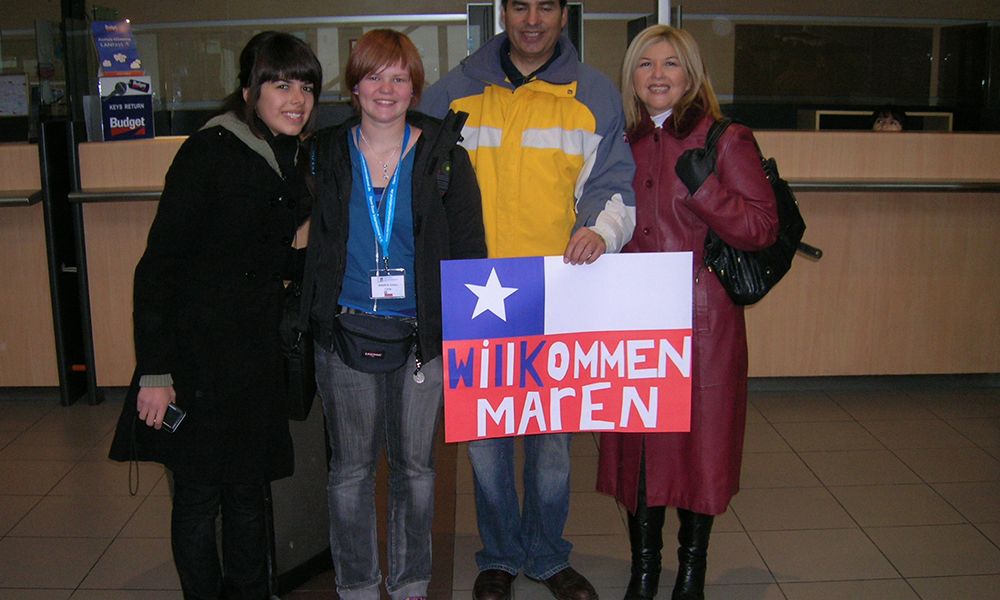
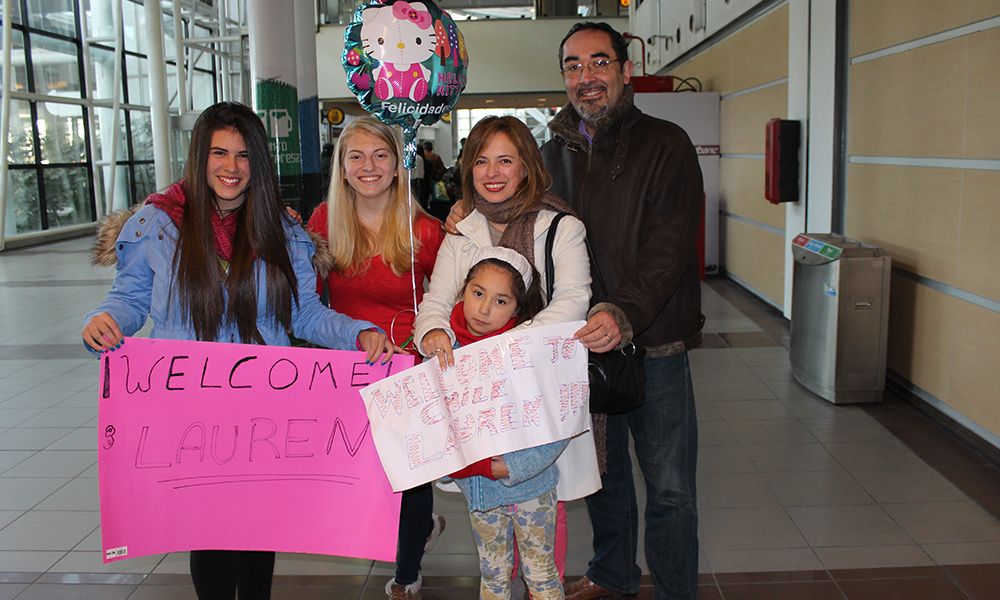
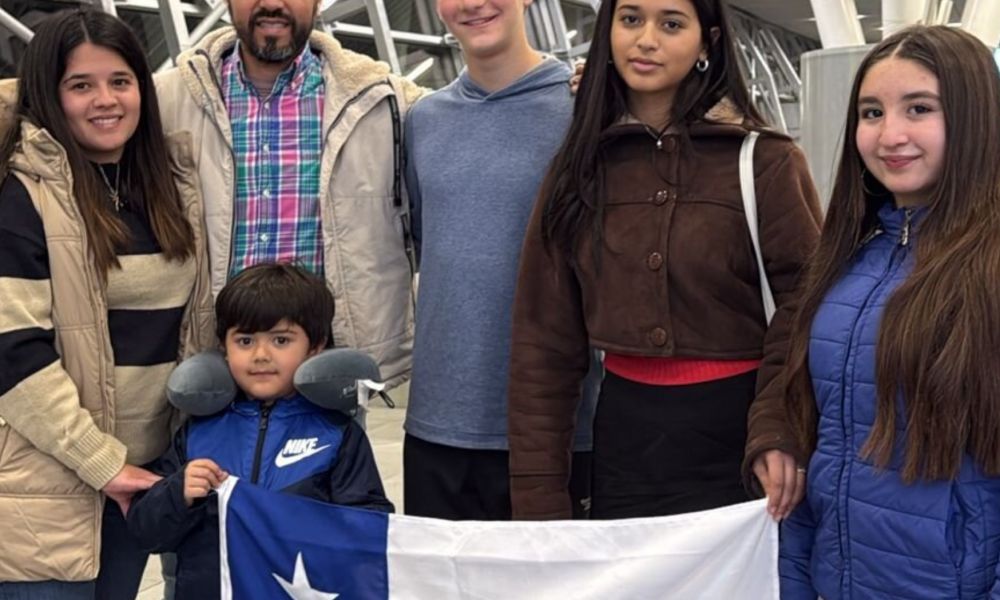
Your journey starts by meeting at the airport in Santiago, your Chilean host family who opens their home and heart to you. In addition to providing you with Room and board, your Chilean host family introduces you to the family culture and Chilean life, and they are your passport to this immersive Chilean adventure!
They are your family away from home and guide you throughout the experience with the support of your local coordinator!
You create memories of a lifetime and build a strong relationship with your Chilean family for the rest of your life.
Travel & Orientation
Once you land in Chile, you are warmly welcomed by your host family and your local coordinator. Your local coordinator remains in touch with you throughout your stay in Chile and is a support worker: you can rely on this staff to help you at any time during your exchange in Chile. Your local coordinator will conduct an orientation so that you can settle into your new life and start this adventure with all the necessary information and tips!
Program Dates 2027
Trimester: Students can stay for one trimester starting in March, May, July, and September (consult with us about exact dates).
Semester:
- March 1, 2026 to July 4, 2027
- July 4, 2026 to December 4, 2027
Academic year: March 1, 2027, to December 4, 2027
Enrolling in our High School Exchange Program in Chile is a straightforward and exciting process!
Follow our step-by-step application guide:
1. Learn more about our Study Abroad Programs in Chile: Carefully read our Program Booklet, available on request, have a look at country information, and be inspired by former participants of the High School Study Abroad in Chile. Compare durations and start dates.
2. Contact Us: Get in touch with our dedicated Advisor to ask questions and even schedule a call to discuss the program further. We are here to clear any doubt, answer your questions, discuss your needs and preferences, and guide you throughout the process.
3. Book your Program: Ready to join us on this immersive journey in Chile? Book your program online and receive a login and password to prepare your application package.
4. Prepare Your Application Package: Complete your application package. It usually includes an application form, a host family letter, school records, medical records, and sometimes an introduction video.
5. Attend an Interview: Upon receiving your application package, we schedule an interview with you to get to know you better and learn more about your motivation, expectations, and preferences towards your exchange program in Chile. We also answer any remaining questions you may have.
6. Receive your Program Acceptance: You submit your application package and we assess it. If you are accepted into the High School exchange program in Chile you receive a letter of acceptance and a deposit invoice. Payment of your acceptance deposit confirms your commitment to attend the program.
7. Placement Process and Ongoing Orientation: While our local in-country team works on securing the most suitable school and family placement for you in Chile, you receive from us ongoing program information, orientation on Chilean family life, introduction to the Chilean school system, and pre-departure information.
8. Apply for your Chilean Visa: If you need a visa to study in Chile, our team provides you with visa guidance and all necessary documentation to apply for your Chilean Student visa.
9. Work on your Travel Arrangements: Once you have your visa on your passport, it's essential to plan your arrival and departure according to the program dates and destinations. Book your flight accordingly and we arrange your pick-up and transfer. Do not hesitate to consult your Advisor for guidance!
10. Departure: Prepare your suitcase and check in! Our in-country support team welcomes you in Chile and provides you with assistance during the first few days to make sure you settle in smoothly! Rely on your local coordinator and Nacel support team to support you throughout your student exchange in Chile.
Begin your journey with Nacel now: take the first step on this incredible adventure.
Visa information: Information regarding visas is provided after acceptance into the program. To learn more, visit the Embassy of Chile website.
High School exchange in Chile 2027
Prices valid for March, July and September 2027 intakes.
* Price in Euros per participant.
Not included : Application Fees (65 EUR)
High School Abroad in Chile:
- Semester Abroad Chile
- School Year Abroad Chile
- High School Summer Abroad Chile
💰 What's Included in the Price?
- 20+ years of experience providing high-quality study-abroad programs
- Processing of student applications
- Host family accommodation with full board
- Airport pickup and transfer from Santiago de Chile to the host family after orientation at the airport, by unaccompanied bus transfer if the host family does not live far away from Santiago (please note that students may have to pay an additional transfer by flight if they are placed far away from Santiago; for arrivals and departures outside of official dates/hours, an extra fee is charged)
- Orientation on arrival by the local coordinator at the airport
- Local health, accident and private liability insurance
- Necessary documentation for the student to obtain a student visa for Chile and visa guidance
- Support, assistance, and 24/7 Hotline
- Regular Progress Feedback
- Access to an in-country support team, and Nacel Student Support staff
🚫 What's Not Included?
- Round-trip international airfare
- Non compulsory insurances (luggage lost, flight delay etc.)
- Visa, passport and medical exam fees
- Extra activities organized by schools and others
- Extra language courses
- Local transport (to and from school for example)
- Extension fee (1000 euros), late application fee (550 euros)
- Late airport arrival fee (120 euros); early arrival (200 euros)
- School uniform (around 160 Euros) and shoes, school lunches (around 3 Euros /day), school books (around 150 Euros) and material
- Personal expenses and spending money
- Liability and Emergency Repatriation Insurance


For this High School Abroad in Chile, you:
- must be between 14 to 18 years old.
- need to be interviewed by our counselor before being accepted for a High School Program in Chile.
- need to have a minimum of one to two years of Spanish study (either in a face-to-face language class or online).
- need to have good grades at school.
If your Spanish level is rather low, we advise you to attend a local 2-week Spanish Language Course on arrival.
Frequently Asked Questions
website_faq_common_subtitle
There are a few tips that will help your child feeling confident and secured abroad. Here are some ideas for him/her:
- Self-learning: try to learn usual expressions you may have to use in your daily life, do thematic wordlists (food, entertainment, clothes…).
- Try to read a book or see a movie in original version, with subtitles in the language too: this is a good training to improve your hearing skills and this will prepare you to your life abroad.
- Collect information about the country or area you will be living in: How is the climate there?
What activities can be done? Are there places to visit? If you are doing a Tour, check the different places you will go to! These tips will leave you with many ideas of outside-of-the-classroom activities and help you to plan your trip so you won’t miss a visit!
Host family quality is one of the biggest factors in a successful High School Abroad experience, so Nacel puts every prospective family through a careful vetting process before matching them with a student.
- Selection process. Local coordinators personally interview and visit each prospective host family before approving them to host an exchange student.
- What host families are like. Approved families are warm, welcoming, and open-minded; proud to share their lifestyle and language; willing to fully include an exchange student in their family and community; and aware that today's youth need to grow into world citizens.
- Room arrangements. Students may be placed in an individual room or a shared room, depending on the destination and program. Students of different sexes are never placed in the same room, and roommates sharing a room are generally no more than 4 years apart in age.
- Independence expectations. Host families are not responsible for organizing activities or entertainment for the student. Exchange students need their own spending money and should be mature enough to occupy themselves and engage with their host community independently.
Bottom line: Nacel's host families are personally vetted for warmth and openness, but parents should prepare their child for a degree of independence, since host families support and welcome students without acting as full-time activity planners.
Here are some tips for you:
1) Communicate! Please talk about everything and be open with your host family. For example, tell them about your school life, where you are going, and what time you will return. Make a point to discuss host family rules, and schedules (such as when you can take a bath) right away.
2) Ask Questions. When in doubt, ask your host family for help. You might not understand everything at first, but your host family wants to help. You might feel less independent in the beginning, but these feelings will go away eventually. Don’t hesitate, or feel it is impolite to ask many questions. This is normal.
3) Discuss Issues. Sometimes there will be small problems adjusting for you and your host family. It is important to talk about these frustrations even if they seem small. Always talk to your host family first about any problems. If you become sick, tell your host family right away.
4) Allow adjustment time. You may form an image of your host family within the first couple of days that isn’t accurate. Your host family might take you sightseeing, fix special foods, or be extra polite when you first arrive. Little by little, you and your host family will feel more comfortable around each other and act naturally.
5) Participate in Family Life. Don’t hide in your room. If you are feeling homesick, hiding in your room will only make it worse. Have fun with your host family, and share in evening or weekend activities.
6) Keep an Open Mind. Look at differences as new and fun experiences. This is your chance to try many new things that you might not be able to do in your home country. Take advantage of the opportunity!
7) Be polite and friendly. This is important. You might not talk very much with your family in your home country, but if you shut yourself off from your host family they will assume that you are homesick or unhappy. When you like something, be sure you tell them. A “thank you” and a smile can go a long way!
8) Help with Housework and Chores. Seriously, you would be surprised at how much an offer to do the dishes will mean to your host family.
Remember, your host family will also be nervous, especially if it is their first time hosting. They worry about whether you like the food or their family. If you are open and friendly, you will help to put them at ease. At the end of your stay, you will probably find that you do not want to leave!
Studying abroad in high school offers benefits that extend far beyond the classroom, shaping students academically, personally, and socially.
- Language development. Students develop and improve new language skills through full immersion in a foreign-language environment.
- Cultural immersion. Living abroad means immersing yourself in a new culture and an entirely different way of daily life.
- Independence. Navigating life in a new country builds self-reliance and confidence.
Broader perspective. Students gain a new outlook on their home country, their destination country, and the world at large, developing a deeper appreciation for diversity. - Lasting relationships. Living with a host family and attending a local high school creates opportunities to make friends and build international friendships that can last a lifetime.
Bottom line: A High School Abroad program delivers language gains, cultural immersion, personal growth, and lifelong international friendships, benefits that make the experience valuable well beyond the exchange year itself.
Yes. Making friends and building cultural understanding are core goals of every High School Abroad program, and extracurricular activities are one of the best ways to achieve both.
- School-based activities. Many host high schools offer clubs, sports teams, and other extracurricular programs where students can get involved alongside local classmates.
If your school doesn't offer your specific interest. Not every host school will have a club or program matching your particular hobby, but that's rarely a limitation in practice. - Community options. Your host town will typically have clubs, community facilities, and sports centers outside of school where you can keep developing your skills and interests.
- Building friendships. Whether through school clubs or community activities, these opportunities create natural, ongoing chances to build lasting friendships with local students.
Bottom line: Between school clubs and community resources in your host town, High School Abroad students have plenty of ways to stay active in their interests and form genuine, lasting friendships with local peers.
Yes. Once your placement is confirmed, you can start getting to know your host family right away, well before you depart.
- Timing. Introductions typically begin as soon as your host family match is finalized, giving you weeks or months to build a relationship before your High School Abroad program starts.
- Communication channels. You're free to connect however works best for you and your host family, including email, phone calls, or video calls.
- Why it matters. Early contact helps ease the transition, lets you ask questions about daily life and house rules, and gives both you and your host family a head start on feeling comfortable before you arrive.
Bottom line: You don't have to wait until you land to meet your host family. Nacel confirms your placement early so you can start building that relationship right away, using whichever communication method suits you both.
There are a few tips that will help your child feel confident and secure abroad. Here are some ideas for him/her:
- Research takes time to research the destination´s culture, geography, and climate. In addition, once you have been assigned a host family, we also suggest communicating with them to get to know them, start building a relationship, and understand their expectations.
- Self-learning: try to learn the usual expressions you may have to use in your daily life, and do thematic wordlists (food, entertainment, clothes…).
- Try to read a book or see a movie in the original version, with subtitles in the language too: this is good training to improve your hearing skills and this will prepare you for your life abroad.
What activities can be done? Are there places to visit? If you are doing a Tour, check the different places you will go to! These tips will leave you with many ideas for outside-of-the-classroom activities and help you to plan your trip so you won’t miss a visit!
Packing thoughtfully for a High School Abroad program helps students settle in smoothly and stay prepared for both daily life and travel logistics.
- A gift for the host family. Not mandatory, but a small, modest gift that reflects your home country and culture is a thoughtful way to break the ice.
- Electronics and adapters. If your child is bringing electronic devices, check whether the destination country requires a plug adapter and pack one if so.
- Language tools. A small, two-way language dictionary is considered a must-have, along with a travel guide or map of the host city or area.
- Luggage. Students are responsible for handling their own luggage, so packing light is strongly recommended.
- Essentials to include. Passport and travel documents, school supplies, and a photo album from home are all worth packing. Checking the local weather in advance also helps your child pack appropriate clothing.
- What to keep in hand luggage. Any necessary medication for illness or ongoing treatment, acceptance letters, passport, visa documents, insurance certificate, host family contact details (or details of whoever is picking them up), the program's emergency phone number, electronics like a camera or music player, and any jewelry or glasses.
Bottom line: Smart packing for a High School Abroad program means traveling light, keeping critical documents and essentials in hand luggage, and bringing a few practical extras, like a dictionary and a small host-family gift, that make the transition abroad easier.
There are several options available for High School exchange programs in Chile:
- Academic Year Program (AYP): March 2 – December 6, 2026.
- Academic Semester Program (ASP):
Semester 1: March 2 – July 6, 2026.
Semester 2: July 5 – December 6, 2026.
- Short-Term Programs (STP): 3 to 12 weeks, from mid-March to early December (no visa required).
Students interested in participating in a High School exchange program in Chile must be between 14 and 18 years old. Individual assessments will consider maturity, attitude, and prior experiences.
They also must have a one-year course and/or basic communication skills in Spanish.
If skills are insufficient, a two-week Spanish course is mandatory.
Every application must be submitted by October 30th for those who wish to start in March, and no later than April 15th for those who wish to start in July.
Yes. Students will receive an orientation upon arrival, either at the airport or at their destination. Follow-up meetings occur within two weeks to address questions.
Yes. Early arrivals are accommodated for €150, covering airport pickup, meals, and lodging.
The program includes tuition, host family (full board), administrative fees, local coordination and support, transportation to/from the Airport, orientation course, and local insurance (health, accident, and private liability insurance)
Parents are advised to give the students around €150 or $200 per month for personal expenses.
Exchange students will attend private Chilean High Schools.
They usually go with their host sibling to the same school, sometimes in the same grade. The schools welcome students from Grades 1 to 12. The average size of schools varies from 400 to 1200 students; schools include all levels (1st to 12th grade).
The school year runs from mid-February to mid-December
Yes. One of the requirements of the program is to have a one-year Spanish course or have basic communication skills in Spanish.
Since Spanish is the main language in Chile, students are expected to use it at all times and therefore, improve their Spanish skills significantly.
Chilean families may have different meal patterns, transportation habits, and holiday traditions. Adaptability is crucial.
Coverage includes health, accident, liability, and COVID-19 assistance.
Students participating in a High School Abroad program are expected to follow a clear set of behavioral guidelines throughout their stay, designed to keep them safe and in good standing with their host family and school.
- Daily school attendance. Students must attend school every day for the duration of the program.
- Host family and school rules. Students are expected to follow the rules set by both their host family and their host school at all times.
- Prohibited activities. Students may not drive, smoke, drink alcohol, or use drugs at any point during their participation in the exchange program.
Bottom line: High School Abroad participants are held to consistent expectations, daily school attendance, respect for host family and school rules, and no driving, smoking, drinking, or drug use, for the full duration of their exchange.
The student will be helped by our local representative and his/her host family to visit a local doctor and get the necessary medical treatment. If hospitalization, surgery, or repatriation is needed, the insurance should be first informed.
If necessary, our team at the headquarters located in France, which delivers a 24-hour emergency service, 365 days a year, may assist you. The phone number of this service will be given to you before the student’s departure.
Please be sure to have a medical insurance. We can provide you with one, for an additional cost. Ask us for more information about the insurance policy!
Your child’s trip abroad will be a rewarding experience, but he/she has to be ready to change his/her way of life for some time and to adapt to the host family.
Here are some tips to check if your child is ready for this challenge:
- He/She is the one who wants to participate in the study abroad program. Never force your child to go abroad if he/she doesn’t want to! At best, he/she won’t enjoy his/her trip as much as if he/she had decided him/herself. At worst, he/she will be repelled by his/her language studies back home!
- He/She shows interest and curiosity about the language or the country he/she is going to visit.
- He/She is independent enough to be able to cope with problems that may occur (flight delays, loss of luggage, waiting time…), or with homesickness (has he/she already been far away from home? How did he/she cope with that?)
- He/She is mature enough. In some of our programs, supervision is high, and activities are planned all day long. But in others, students are less supervised and must be mature and responsible enough to behave according to the program’s rules and to find occupations.
If you are not sure if your child is ready or not, we can advise you! Meet the team of Nacel!
Homesickness may happen to everyone, even people who have already been abroad without having faced any problems before. To prevent homesickness, keep in touch with your child, but not too much/too often (see below), and follow our preparation tips. If it is your child’s first experience abroad, a short-term experience would probably be the best choice for you to make, so that your child can “test” himself/herself.
The purpose of most of our programs is the immersion in another country’s language and culture. During the first days, it is normal if your child feels a bit homesick, and too frequent communication with his/her natural parents could delay his/her integration into the host country.
You can suggest she/he get involved in local activities, clubs, and sports to help her/him make friends with similar interests.
In both programs, students are assigned to a host family and attend a local high school. The main difference is the duration of the program and whether the student returns with class certifications. The Nacel Homestay programs are usually shorter (up to 12 weeks) and do not provide class certifications. It is a pure cultural immersion program.
Nacel takes student safety very seriously. Every family presents criminal and police records, IDs, and recommendation letters. Most of our families are recommended by local schools or other host families. In addition, we visit each household to make sure that the conditions and area are adequate to receive international students.
Yes! You can read the reviews that parents and students have written about Nacel on Google, GoOverseas, and GoAbroad.
We can also introduce you to former students who can tell you about their experience and answer additional questions you might have.
For Nacel, the match with the host family is key. We use a matching system where we pair students and host families based on goals, interests, and hobbies. We understand that cultural differences can affect the relationship, so first we try to mediate and reach a consensus. However, when needed, students are placed with another host family.
No results found