



Make Canada your home.
Settle in with a Canadian host family, join a local high school, and spend a trimester, semester, or full year discovering life beyond the postcard. From lunchtime conversations to your first snowy school morning, everyday moments become part of your adventure, and English becomes part of your everyday life.
Interested in this program?
We're happy to help you plan your stay.
Next available start dates: August 2027 and January 2028. Applications are now open.
Last-minute applications for the Spring Semester 2027 starting in January 2027? Contact us now.
Nacel’s High School Exchange in Canada offers students aged 14 to 18 the opportunity to improve their English while experiencing Canadian life. Participants attend a local high school and stay with a selected host family for a trimester, semester, or academic year. Placements are available in Manitoba, Saskatchewan, and the Toronto area, with local support and 24/7 emergency assistance throughout the program.
Study in a local high school and live with a Canadian host family
Canada has become one of the most attractive places to complete an educational exchange program: international students discover the rich diversity of the Canadian culture while enjoying an efficient school system. International students who enroll in a High School in Canada will have the opportunity to attend a public or private school and live with a welcoming Canadian Host Family.
You may study in:
- Manitoba: Winnipeg is the capital city of Manitoba and the historic trading centre for First Nations people, before being settled by the French during the 18th century. This province has many large lakes, like Lake Winnipeg, and a great variety of landscapes.
- Saskatchewan: Saskatchewan, a Prairie province, is bordered to the west by Alberta, to the north by the Northwest Territories, to the east by Manitoba, to the northeast by Nunavut and to the south by the American states of Montana and North Dakota. The province hosts 100 000 lakes!
- Greater Toronto Area: We place students within the Greater Toronto Area (GTA). It is situated just west of Toronto and includes the cities of Mississauga and Brampton, as well as the town of Caledon. The area is known
for its cultural diversity, modern cities, beautiful parks, and its close proximity to Canada’s largest urban centre. - Toronto city
Study Abroad in Canada: Highlights
Nacel’s Classic High School Exchange in Canada brings together classroom learning and everyday life with a Canadian host family. You’ll practise English in real situations, build friendships at school, and share your own traditions with the people who welcome you.
- From semester to full academic year programs.
- During their high school exchange in Canada, students live with a host family and attend the local public or private high school.
- Transfers from the closest major airport to and from the host family are included.
- School placements in several Canadian destinations
- A home to share: Stay with a selected host family, with meals included, and discover Canadian routines while introducing your hosts to your own culture.
- Guidance as you settle in: A local orientation helps you prepare for your exchange and adjust to your new surroundings.
- Support throughout your stay: Local coordinators provide ongoing assistance, with a 24/7 emergency helpline available when needed.
Need more guidance to choose your experience?
Step into Canadian high school life
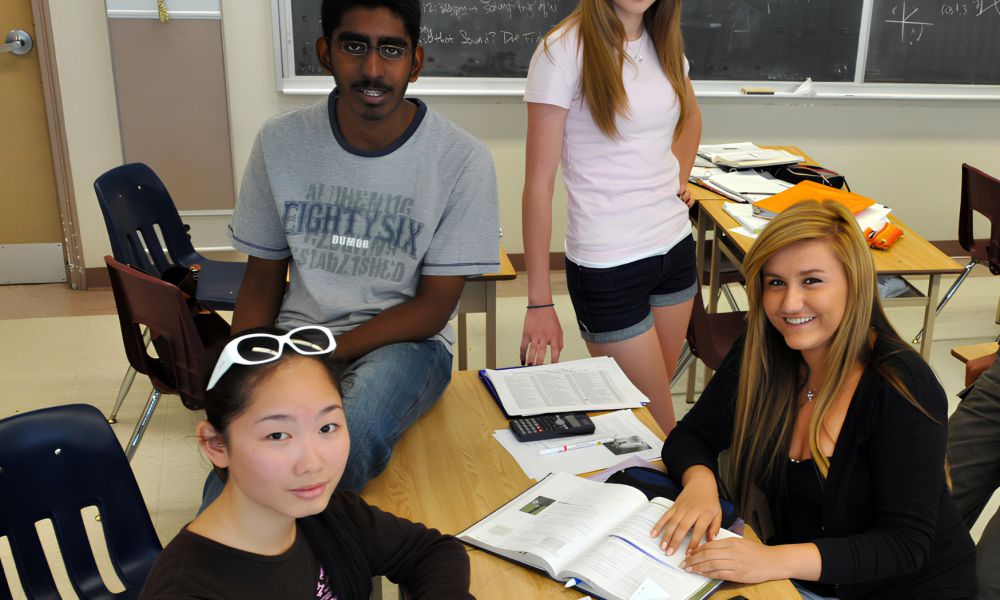
Become part of a local school community, sharing classes and everyday experiences with Canadian classmates. Whether you choose a semester or a full academic year, you’ll receive a transcript documenting the subjects you studied and the grades you earned.
Canada’s education system has three main stages: elementary school, high school, and post-secondary studies at a college or university. Each province and territory manages its own schools, so structures and calendars vary. The school year typically runs from September to June.
Students study core subjects such as English or French, mathematics, and history, alongside elective courses that allow them to explore their interests. The choice of electives depends on the school.
School week: Monday to Friday, with lessons starting between 8:30 and 9:00 am.
Daily timetable: Students generally attend four or five classes, each lasting around 70-80 minutes.
Lunch break: Usually one class period or approximately an hour, scheduled between 10:30 am and 2:00 pm.
End of the day: School typically finishes between 2:30 and 3:30 pm.
Academic credits & Grade recognition
Earning academic credit
Before enrolling, speak with your school counselor to confirm how your studies abroad will count toward your education at home. Requirements differ between schools and education authorities, so clarify these well in advance.
If the student has attended one full semester or a full year at his/her Canadian school, if he has written all necessary exams, has completed all required work, and has obtained a passing grade, he or she will be granted with a credit for each class completed. In most provinces, students take 4 classes per semester. All grades will be provided on an official school transcript.
Graduating from a Canadian high school
Planning a longer stay? Completing Grades 11 and 12 in Canada may give you the opportunity to earn a Canadian high school diploma, provided you meet the school’s graduation requirements.
If you don't need academic credit
That's fine too: your time in Canada will still build valuable international experience that strengthens your academic and professional profile going forward. We offer a non-credit program in Saskatchewan, in the Cornerstone school district.
Although Nacel is not responsible for determining the requirements in a student’s home country, our experienced team will provide guidance and support throughout the process.
See our full guidance on transcripts, grading, and academic credit before you apply.


Get involved in your Canadian community
Teenage life in Canada includes extracurricular activities that Canadian students attend at school or in local clubs, such as sports, language courses, Arts, Music, Theater, gym, etc. We encourage you to sign up for extracurricular activities: you make new friends, practice English in a different environment than the classroom, stay fit and busy, and build strong relationships with teens from different backgrounds. This is an additional value of your exchange program in Canada.
Find your place beyond the classroom
Joining a team or club is a great way to meet Canadian students, discover shared interests, and feel part of your new school. Whether you enjoy sports, performing, or working on creative projects, getting involved adds another dimension to your exchange.
Sports vary by school and season, but options may include:
- Fall: Badminton, cross-country running, rugby, soccer, swimming, and volleyball.
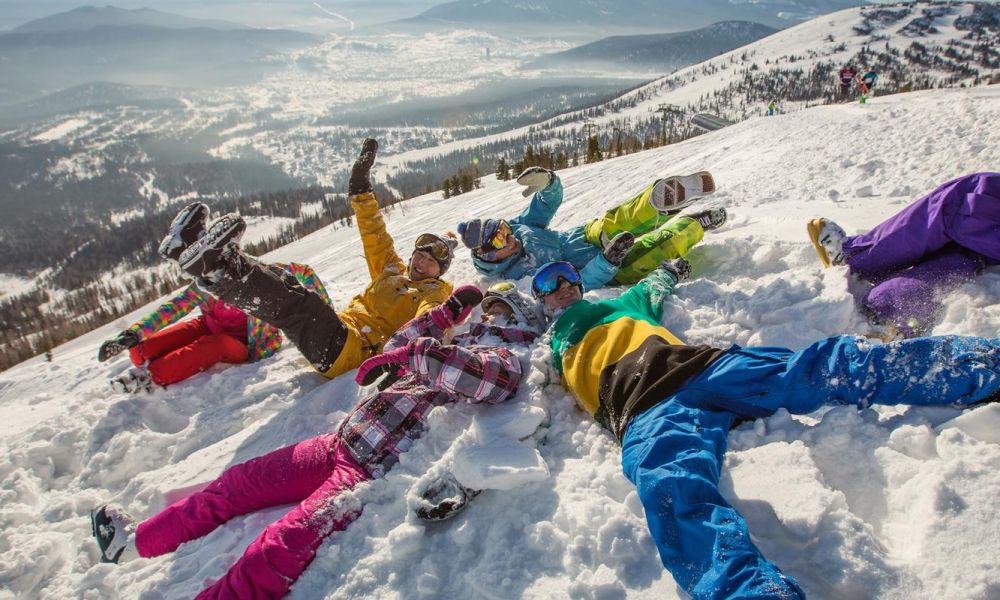
- Winter: Basketball, skiing, snowboarding, and wrestling.
- Spring: Golf, mountain biking, rugby, soccer, tennis, track and field, volleyball, and ultimate frisbee.
- Access to competitive teams depends on eligibility rules, and exchange students may face restrictions.
Beyond sports, you could join a band, choir, theatre group, or a club focused on debating, the environment, art, chess, or mathematics. Other opportunities may include contributing to the school newspaper or yearbook, serving on the student council, or helping organize graduation and prom. Activities depend on what your host school offers.

Live with a Canadian host family
Our high school exchange in Canada includes all meals taken with the host family (full-board).
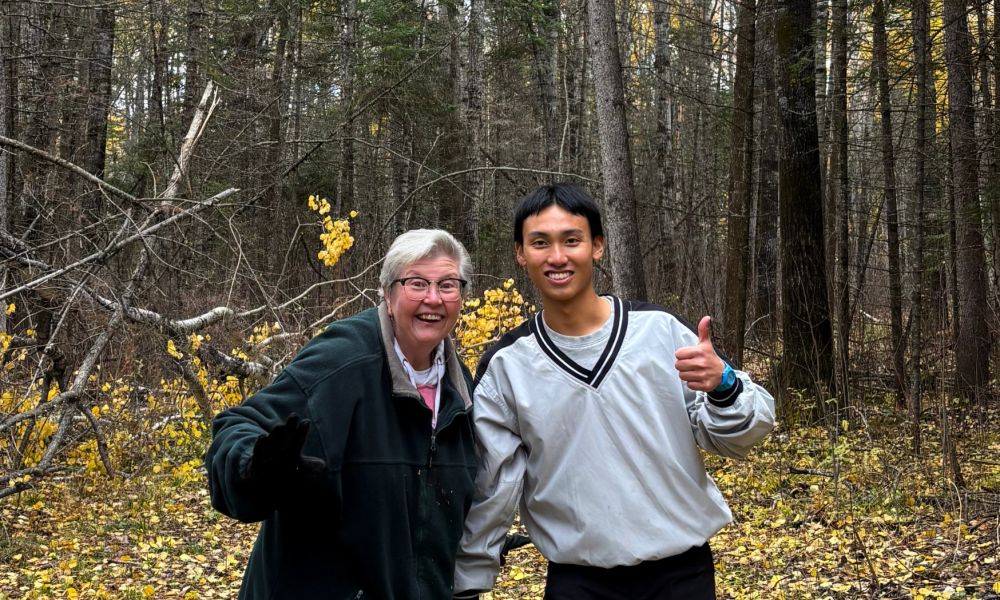
You are welcomed by a warm Canadian host family and learn firsthand about one another's culture. You will have the opportunity to develop your English language and social skills by meeting new friends and sharing experiences with your Canadian host family. Canadians are always looking forward to learning about your culture, yourself, and everything about your home country. Host families are selected by our local coordinator, based on availability and your interests and hobbies.
Canadian host families are also well known for supporting exchange students by offering care at all times. International students will feel at home from the moment they arrive.
You can also count on the full support of our local coordinators in Canada, who will be more than glad to offer any extra support. Students must be aware that they might be placed in several host families during their exchange program in Canada.
Program Dates 2027:
- Fall semester and academic year; start date: September 7, 2027
- Spring semester; start date: March 17, 2027
To apply to a high school exchange program in Canada, you must make sure to complete your application by following these steps:
- One of our dedicated advisors will be in touch with you to arrange a meeting with you and your family to decide if you qualify for the program. During your interview we will consider your language level, your motivation to adapt into a new society, as well good school performance.
- When you are prepared to apply, you should complete a web booking. When this is done, we'll send you your application form. You need to revise it carefully and send it back to us.
- When you are accepted into the High School exchange in Canada, we will issue the formal admission letter and invoice.
- We will start working on your host family placement; once it is ready, it will be shared with you.
- We will issue all the essential visa materials for you to start the procedure at the closest consulate.
- Once your visa is valid, you need to book your flights and share the details with us so we can arrange your pick-up from the airport; there, your local rep or host family will be waiting to welcome you.
Visa information: Information regarding visas is provided after acceptance into the program. To learn more, visit the Embassy of Canada website.
High School exchange in Canada 2027/2028
Prices valid for school year 2027/2028.
* Price in Canadian Dollars per participant.
Not included: Application Fees (65 EUR)
High School Abroad in Canada:
- Trimester Abroad Canada
- Semester Abroad Canada
- School Year Abroad Canada
- Mini High School Experience Canada
💰 What's Included in the Price?
- 20+ years of experience providing high-quality study-abroad programs
- Processing of student applications
- Mandatory school fees (schools will ask for a deposit for books) – core subjects only
- Host family accommodation with full-time boarding
- Medical and Emergency Repatriation Insurance (not included in Manitoba)
- Necessary documentation for the student to obtain a student visa for Canada and visa guidance
- Support, assistance, and 24/7 Hotline
- Regular Progress Feedback
- Access to an in-country support team and Nacel Student Support staff
🚫 What's Not Included?
- Round-trip international airfare
- International Travel Insurance
- Visa, passport, and medical exam fees
- Extra activities organized by schools and others
- Daily transfers from family to school (bus passes)
- School supplies and calculators, uniforms and sport uniforms, club or team fees
- Extra language courses
- All domestic transfers in Canada
- Individual transfers for arrivals outside of scheduled arrivals and departures
- Medical and Emergency Repatriation Insurance (for Manitoba only: 550 CAD/year)
- Legalization of High School Transcripts (225 CAD)
- Personal expenses and spending money


For this High School Abroad in Canada, you:
- must be between 14 and 18 years of age.
- must have a minimum of 2 years of studies in English to be accepted in the program.
- must be secondary school students in their home country.
- must not have completed more than eleven years of primary and secondary studies.
Native-English speakers are also welcome!
Frequently Asked Questions
website_faq_common_subtitle
In both programs, students are assigned to a host family and attend a local high school. The main difference is the duration of the program and whether the student returns with class certifications. The Nacel Homestay programs are usually shorter (up to 12 weeks) and do not provide class certifications. It is a pure cultural immersion program.
Nacel takes student safety very seriously. Every family presents criminal and police records, IDs, and recommendation letters. Most of our families are recommended by local schools or other host families. In addition, we visit each household to make sure that the conditions and area are adequate to receive international students.
Yes! You can read the reviews that parents and students have written about Nacel on Google, GoOverseas, and GoAbroad.
We can also introduce you to former students who can tell you about their experience and answer additional questions you might have.
For Nacel, the match with the host family is key. We use a matching system where we pair students and host families based on goals, interests, and hobbies. We understand that cultural differences can affect the relationship, so first we try to mediate and reach a consensus. However, when needed, students are placed with another host family.
No results found
Not ready to commit yet? Let us help you!