

I want to learn
and I want to go to
Discover Nacel’s high school abroad programs for students aged 13 to 18. Study overseas for a few weeks, a school term, a semester, or a full academic year while living with a carefully selected host family or attending a boarding school. With destinations across Europe, North America, Latin America, Asia, Africa, and Oceania, Nacel helps you choose the program that best matches your academic goals, language level and interests.
Since 1957, we have supported international high school students throughout their experience, from program selection and school placement to accommodation, visa guidance, insurance and local assistance.
French High School Abroad

Spanish High School Abroad





English High School Abroad








Dutch High School Abroad

German High School Abroad

Italian High School Abroad

Japanese High School Abroad

Korean High School Abroad



A Legacy of Confidence and Success in Cultural Exchange
With decades of experience, certified quality, global partnerships, dedicated support, and a commitment to safety, Nacel ensures every student embarks on a transformative journey with confidence and trust.
- Find Your High School Study Abroad Program
- Who Can Study High School Abroad?
- Choose your High School Abroad destination for 2027
- Choose the language of your High School Study Abroad program
- Choose the Length of Your Program
- How to Apply for a High School Abroad Program?
- What Is Included?
- How Much Does a High School Abroad Program Cost?
- Why choose Nacel for your High School Abroad experience?
- High School Abroad Guides and Student Resources
- Frequently Asked Questions
Find Your High School Study Abroad Program
Are you considering studying abroad during high school? Our Study Abroad programs for international students are a truly immersive cultural experience. These programs encourage cross-cultural learning and help young people become confident, internationally minded global citizens.
Discover how a Nacel exchange program can support your international education: tell us your preferred destination, duration, language, and budget. A Nacel advisor will recommend the most suitable programs for you.
Schedule a Free Consultation with our Advisors
What is the high school abroad experience for?
Nacel exchange programs for international students are open to students aged 13 - 18 years old (according to the country) from all over the world. Some restrictions may apply due to visa and foreign residency conditions. Most of our exchange students are aged :
- 14/15 years old (freshmen; Grade 9),
- 15/16 years old (sophomores; Grade 10),
- 16/17 years old (juniors; Grade 11),
- 17/18 years old (seniors; Grade 12).
How long does a high school abroad program last?
High School study abroad is possible with a duration of:
- a month,
- a school term abroad,
- a school semester abroad,
- or a school year abroad.
What type of school does an exchange student typically study at?
International exchange students may attend a public or private high school during their school year abroad.
Foreign exchange students either attend:
- a day school while living with a host family
- a boarding school, living on campus either part-time or full-time
Where do high school exchange students live?
During the high school abroad program, accommodation is offered in:
- host families,
- boarding quarters
- or student residences.

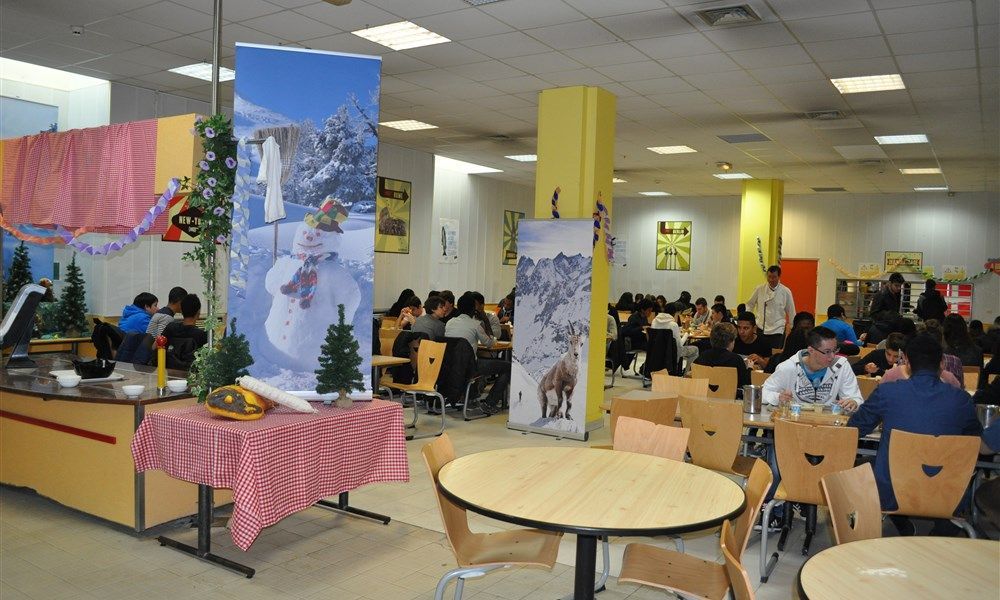
Who Can Study High School Abroad?
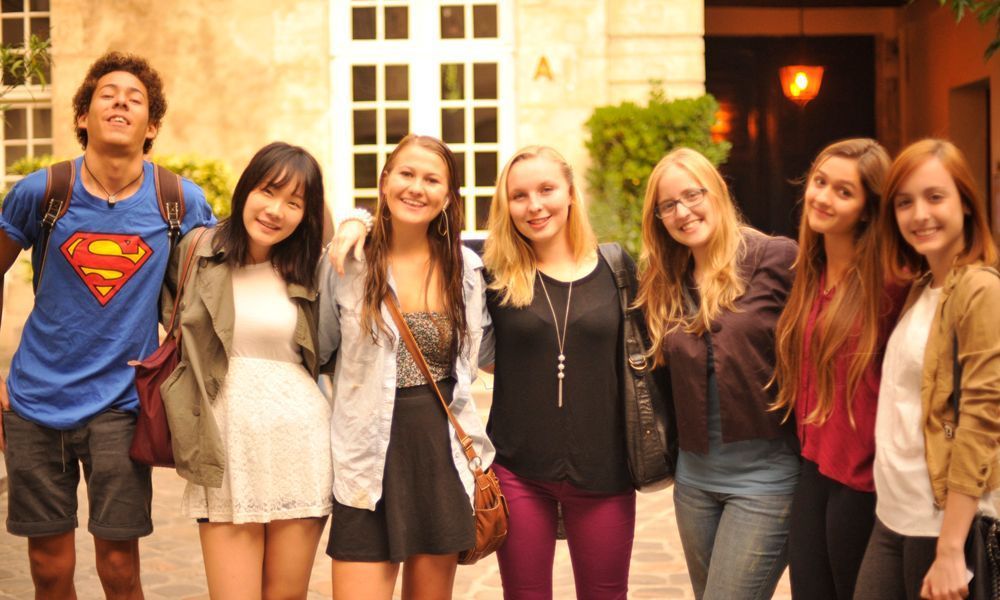
Participating in a school year abroad means full immersion in the country's life: it is the best way to reach proficiency in the foreign language of the country as well as gain a complete cross-cultural and intercultural experience. The best way to bilingualism!
The Nacel exchange program is selective: every student must be interviewed before being accepted.
High school exchange students generally need to meet the following requirements :
- Age specification according to the country,
- 2 or more years of language study with good grades,
- An above-average academic record,
- Previous experience of living away from home,
- An interest in learning about another culture and language,
- A willingness to make new friends and to share the daily life of a host family,
- An open and flexible attitude.
Learn more about how to become a high school exchange student.
Nacel Advisors helps you determine the "best" place for YOUR high school exchange year: based on your preferences, goals, interests, language skills, objectives, and budget, your Advisor suggests possible destinations. Each student is unique, and we pay great attention to your project.
The school year abroad is available in 17 countries. Choose your preferred destination for your exchange program for high school students.
We offer Nacel study abroad programs for high school students in various foreign languages, countries, and lengths!
Choose your High School Abroad destination for 2027
Nacel Educational Travel offers High School Study Abroad in various continents around the world. Study in a high school in Europe, North or Latin America, or even Asia, Africa or Oceania! Find the best study abroad high school programs for you!
Explore high school abroad programs in Europe :
Latin America
North America
Asia / Africa / Oceania
Choose the language of your High School Study Abroad program
Choose the Length of Your Program
Applications are now open for 2027-2028 high school abroad programs.
High School Semester Abroad 2027
Spend a school semester in a high school abroad: you will study abroad for 5 to 6 months.
High School Year Abroad 2027
Spend a school year in a high school abroad: you will stay between 9 to 10 months abroad.
How to Apply for a High School Abroad Program?
Study abroad for a term, semester, or academic year with personalized guidance from an international student exchange organization established in 1957.
Our team will guide and support you throughout your entire high school abroad experience. Attend an exchange student program at the high school level with Nacel.
APPLICATION DEADLINE
Applications for student exchange programs abroad are usually accepted:
- until March for sessions starting in August-September
- and until September for sessions starting in January.
Please check the accurate deadlines for each high school exchange year. Late applicants may be accepted, depending on availability and visa delays.
Early application is highly recommended. A student interested in this high school study abroad should contact us immediately and email us the pre-application to secure a place.
Then the student will have to carefully fill out the full application form.
VISA
A High School study abroad program may require students to apply for a student visa, depending on the student’s home country, destination, and program duration. We inform and assist our exchange students during their visa application process.
CREDITS/TRANSFERS
The foreign exchange student is not guaranteed:
- placement in a certain grade level,
- or that transferable credits will be granted,
- or that a diploma will be awarded at the end of the High school exchange program.
These decisions remain at the entire discretion of the national educational authorities. Accreditation for courses taken while in the program is the responsibility of the participant. Nacel is not responsible for the procedures needed in this process but may surely assist and advise. For any advice on getting high school credits while studying abroad, contact your Study Abroad High School Program expert.
Are you looking for a bilingual exchange program? Opt for a school year abroad, with a US-aligned coursewok, in an American school in Paris: Notre-Dame International High School (French + English)
Discover our exchange programs for high school students!
What Is Included?
Every Nacel high school abroad program is designed to provide students with the guidance and support they need throughout their international experience. Depending on the destination and program selected, the package may include school placement, accommodation with a carefully selected host family or in a boarding school or student residence, meals, local support, orientation, insurance, and assistance with application and visa documents.
Some programs may also include airport transfers, activities or excursions.
Please check the individual program page for a complete list of what is included, as services vary by country and program type.
How Much Does a High School Abroad Program Cost?
The cost of a high school abroad program varies depending on the destination, program length, type of school, and accommodation selected. Public school programs with host family accommodation are generally more affordable than private or boarding school programs. International flights, visa and passport fees, personal expenses, and certain school-related costs may not be included. Contact a Nacel advisor for a personalized quotation based on your preferred destination, academic goals, and budget.
Why choose Nacel for your High School Abroad experience?
High School Abroad Programs for International Students Worldwide
- Student exchange organization since 1957
- Programs in multiple countries: 17 High School destinations are available to international students
- Carefully selected host families
- Free student and parent 1-to-1 consultations
- Public, private, and boarding school options
- Length flexibility: study abroad in high school from a few weeks to several years
- Local support system throughout the program thanks to our local offices (Nacel Canada, Nacel Open Door USA, Nacel France, Nacel España, Nacel Mexico, Nacel English School London and Access English Toronto) and network of local coordinators.
- Meet our multilingual international team: our staff comes from many different countries, speaks various languages, and has experienced international education themselves
- Personalized visa support and application guidance
- Truly international experience: join a diverse community of international students, rather than travelling only with exchange students from your home country. We welcome students from 21 countries: Spain, Italy, Ireland, the UK, Germany, Ukraine, Hungary, Poland, Slovakia, the Czech Republic, Japan, Korea, Thailand, Australia, Brazil, Colombia, Mexico, Argentina, Chile, Canada and the USA.
- International recognition: Nacel France is a member of UNOSEL, Nacel Open Door USA is a member of CSIET, and Nacel España is a member of ASEPROCE.
Build friendships with young people from around the world, discover different cultures and develop a truly global perspective.
High School Abroad Guides and Student Resources
More information on our High School Abroad destinations:
- High School Study Abroad in Europe: a world of study opportunities!
- Becoming an Exchange Student in America: A Guide for Applicants from the UK, Ireland, New Zealand, Canada or Australia
- Host family versus Residence: which one should I choose while studying abroad?
- How Studying Abroad Helps Students Prepare For Life
- How about studying in an international school in France? Learn more!
- Before you say yes to South Korea: A guide for parents
- How high school graduation works in Canada?
- High school exchange in Ireland: a complete student guide to daily life and practical tips for exchange students
- 10th Grade in France: what to expect in Seconde
- 11th Grade in France: what to expect in Première
- Discover Korean High School life: Virtual Visit to our Boarding school in Korea
- High School Abroad in Spain: learn more about Spanish grades and grade reports
- Benefits of High School Abroad in Spain: Key Features you need to know
- High School Abroad Argentina: your daily life in your Argentinean school and host family
- High School Study Abroad in Mexico: how will your school year abroad in Mexico look like ?
- Learn more about the French grade report you may earn during your High School Study abroad in France
Practical guides to becoming an exchange student abroad :
- How do I become a high school exchange student?
- How to write a letter to your future host family as an exchange student?
- Planning your School Year Abroad: Nacel Checklist
- How can I earn credits from my High School Study Abroad program?
- Crafting the Perfect Introduction Video for Your Future Host Family: a Guide.
- Exchange student Survival Guide: How to adapt and make the most of your school year abroad
- Tips for the first days living with your host family abroad!
- How much does it cost to study in a High School abroad in 2026? Learn more!
- Communication Guidelines for Students and Parents during the Study Abroad Program
High School Exchange Students Testimonials
- From a high school exchange in France to Sciences Po Paris: Aaron's story.
- Study Abroad in France: Saskia's Student Exchange Experience
- How has studying abroad changed my life? A testimonial of an Australian exchange student in France
- Exchange students tell us about their High School Study Abroad in Argentina!
- A Japanese student in France: discover her experience!
Frequently Asked Questions
website_faq_common_subtitle
Host family quality is one of the biggest factors in a successful High School Abroad experience, so Nacel puts every prospective family through a careful vetting process before matching them with a student.
- Selection process. Local coordinators personally interview and visit each prospective host family before approving them to host an exchange student.
- What host families are like. Approved families are warm, welcoming, and open-minded; proud to share their lifestyle and language; willing to fully include an exchange student in their family and community; and aware that today's youth need to grow into world citizens.
- Room arrangements. Students may be placed in an individual room or a shared room, depending on the destination and program. Students of different sexes are never placed in the same room, and roommates sharing a room are generally no more than 4 years apart in age.
- Independence expectations. Host families are not responsible for organizing activities or entertainment for the student. Exchange students need their own spending money and should be mature enough to occupy themselves and engage with their host community independently.
Bottom line: Nacel's host families are personally vetted for warmth and openness, but parents should prepare their child for a degree of independence, since host families support and welcome students without acting as full-time activity planners.
Studying abroad in high school offers benefits that extend far beyond the classroom, shaping students academically, personally, and socially.
- Language development. Students develop and improve new language skills through full immersion in a foreign-language environment.
- Cultural immersion. Living abroad means immersing yourself in a new culture and an entirely different way of daily life.
- Independence. Navigating life in a new country builds self-reliance and confidence.
Broader perspective. Students gain a new outlook on their home country, their destination country, and the world at large, developing a deeper appreciation for diversity. - Lasting relationships. Living with a host family and attending a local high school creates opportunities to make friends and build international friendships that can last a lifetime.
Bottom line: A High School Abroad program delivers language gains, cultural immersion, personal growth, and lifelong international friendships, benefits that make the experience valuable well beyond the exchange year itself.
Each country has different requirements. In general, these are the most important:
- Age requirement: The student must be between 13 and 18 years old (See the country you are interested in for specific information)
- Language skills: Two or more years of language studies.
- Academic record: An excellent academic record, with good grades.
- Attitude: Having an open mind and a flexible attitude are crucial.
- Motivation: Exhibiting willingness to adapt to a new country, culture, school system, and family customs is critical to success.
Having a spirit of adventure!
Credit transfer for High School Abroad programs depends entirely on the country and school system of your host school, so there's no single guaranteed answer.
Here's what typically affects whether credits transfer:
- Type of record issued. Some host schools can only issue a certificate of attendance, not a grade report. Others provide a grade report similar to what local students receive, but it isn't customized for foreign students and may not cover every subject you'd need.
- Grading scale. Host schools grade on their own country's scale, not your home country's. This scale generally can't be converted directly into your school's grading system.
- Credit systems vary by country. Formal "credits" and GPA are mainly used in the United States and Canada. Most other countries issue a grade report listing subjects, grades, and sometimes teacher comments, but no credits or GPA equivalent.
Your home school makes the final call. You'll bring your host school's grade report back to your home school, and administrators decide independently how many credits, if any, to award based on that report.
Accredited international schools may help. Boarding schools accredited by bodies like IB World Schools, or by British or American accreditation organizations (for schools teaching British or American curricula), often produce records that are easier for home schools to evaluate.
Bottom line: Nacel cannot guarantee credit transfer for any High School Abroad program, since this decision rests with your home school and its educational authorities. Before applying, talk with your school counselor about their specific credit-transfer requirements so there are no surprises when you return.
Yes. Making friends and building cultural understanding are core goals of every High School Abroad program, and extracurricular activities are one of the best ways to achieve both.
- School-based activities. Many host high schools offer clubs, sports teams, and other extracurricular programs where students can get involved alongside local classmates.
If your school doesn't offer your specific interest. Not every host school will have a club or program matching your particular hobby, but that's rarely a limitation in practice. - Community options. Your host town will typically have clubs, community facilities, and sports centers outside of school where you can keep developing your skills and interests.
- Building friendships. Whether through school clubs or community activities, these opportunities create natural, ongoing chances to build lasting friendships with local students.
Bottom line: Between school clubs and community resources in your host town, High School Abroad students have plenty of ways to stay active in their interests and form genuine, lasting friendships with local peers.
The Nacel application process for an exchange student program involves several stages to ensure a thorough evaluation of candidates and to match them with suitable host families and high schools.
It's important to note that the specifics of the application process may vary depending on the country involved.
Here's an overview of a typical application process for an study abroad program:
- After you have decided with your family to become an exchange student with Nacel, you start your application.
- The application form collects personal information, academic background, motivations for participating, and preferences.
- You must submit supporting documents such as academic transcripts, recommendation letters, an introduction letter, video, medical records, and any other relevant documents as specified by the program.
- Successful candidates are notified of their acceptance into the program. The local coordinators then work on matching the student with an appropriate host family and high school based on compatibility and availability.
- If a visa is required, Nacel obtains an enrollment letter from the local high school so you can attach it to the rest of the requirements to process your student visa at the consulate of your country of residence.
- Nacel will provide guidance on travel arrangements and itinerary planning.
Absolutely. A High School Abroad experience can meaningfully strengthen your college applications and set you apart from other candidates.
- Stand out academically. A school exchange abroad gives you a unique academic experience that distinguishes your application from those of students who haven't studied internationally.
- Language gains. Immersion abroad leads to dramatic improvement in language skills, a concrete, demonstrable outcome admissions officers notice.
- Personal growth. Students return more independent, flexible, and open-minded, qualities that come from navigating a new country and culture firsthand.
- Intercultural skills. Exchange students develop cross-cultural competencies that most university applicants simply don't have.
- Recognized value. Colleges, universities, and employers widely value exchange program experience as a marker of maturity, adaptability, and global awareness.
Bottom line: A High School Abroad program isn't just a personal experience; it's a competitive advantage for college applications, giving students language skills, independence, and intercultural fluency that employers and admissions committees consistently value.
Timing your application well in advance gives you the smoothest path to studying abroad, so when you should start depends on which session you're targeting.
- For a September departure (recommended timeline). Contact Nacel between September and December of the prior year. This gives you enough time to gather information, discuss your plans with your parents and high school counselor, and carefully complete your application.
- For a September departure (accelerated timeline). If you're ready to move quickly, you can wait until January through March, but you'll need to stay on top of documents and communications, since the timeline is tighter.
- For a January departure. Start inquiring in July or August, and begin working on your application in September.
Bottom line: Early planning is key to a stress-free High School Abroad experience. Start the process 9-12 months ahead for a September departure, or about 5-6 months ahead for a January departure, to leave enough time for applications, school placement, and visa processing.
Yes. Once your placement is confirmed, you can start getting to know your host family right away, well before you depart.
- Timing. Introductions typically begin as soon as your host family match is finalized, giving you weeks or months to build a relationship before your High School Abroad program starts.
- Communication channels. You're free to connect however works best for you and your host family, including email, phone calls, or video calls.
- Why it matters. Early contact helps ease the transition, lets you ask questions about daily life and house rules, and gives both you and your host family a head start on feeling comfortable before you arrive.
Bottom line: You don't have to wait until you land to meet your host family. Nacel confirms your placement early so you can start building that relationship right away, using whichever communication method suits you both.
Packing thoughtfully for a High School Abroad program helps students settle in smoothly and stay prepared for both daily life and travel logistics.
- A gift for the host family. Not mandatory, but a small, modest gift that reflects your home country and culture is a thoughtful way to break the ice.
- Electronics and adapters. If your child is bringing electronic devices, check whether the destination country requires a plug adapter and pack one if so.
- Language tools. A small, two-way language dictionary is considered a must-have, along with a travel guide or map of the host city or area.
- Luggage. Students are responsible for handling their own luggage, so packing light is strongly recommended.
- Essentials to include. Passport and travel documents, school supplies, and a photo album from home are all worth packing. Checking the local weather in advance also helps your child pack appropriate clothing.
- What to keep in hand luggage. Any necessary medication for illness or ongoing treatment, acceptance letters, passport, visa documents, insurance certificate, host family contact details (or details of whoever is picking them up), the program's emergency phone number, electronics like a camera or music player, and any jewelry or glasses.
Bottom line: Smart packing for a High School Abroad program means traveling light, keeping critical documents and essentials in hand luggage, and bringing a few practical extras, like a dictionary and a small host-family gift, that make the transition abroad easier.
Students participating in a High School Abroad program are expected to follow a clear set of behavioral guidelines throughout their stay, designed to keep them safe and in good standing with their host family and school.
- Daily school attendance. Students must attend school every day for the duration of the program.
- Host family and school rules. Students are expected to follow the rules set by both their host family and their host school at all times.
- Prohibited activities. Students may not drive, smoke, drink alcohol, or use drugs at any point during their participation in the exchange program.
Bottom line: High School Abroad participants are held to consistent expectations, daily school attendance, respect for host family and school rules, and no driving, smoking, drinking, or drug use, for the full duration of their exchange.
Your child’s trip abroad will be a rewarding experience, but he/she has to be ready to change his/her way of life for some time and to adapt to the host family.
Here are some tips to check if your child is ready for this challenge:
- He/She is the one who wants to participate in the study abroad program. Never force your child to go abroad if he/she doesn’t want to! At best, he/she won’t enjoy his/her trip as much as if he/she had decided him/herself. At worst, he/she will be repelled by his/her language studies back home!
- He/She shows interest and curiosity about the language or the country he/she is going to visit.
- He/She is independent enough to be able to cope with problems that may occur (flight delays, loss of luggage, waiting time…), or with homesickness (has he/she already been far away from home? How did he/she cope with that?)
- He/She is mature enough. In some of our programs, supervision is high, and activities are planned all day long. But in others, students are less supervised and must be mature and responsible enough to behave according to the program’s rules and to find occupations.
If you are not sure if your child is ready or not, we can advise you! Meet the team of Nacel!
Yes. Every student traveling for the High school program in Argentina is assigned a Local Coordinator (LC), who will be in close contact with them during their program. The LC supervises, follows up, and can help if there is an emergency with the students.
Students traveling with Nacel for the High school program in Argentina attend local public and private schools, and since they are placed in Córdoba, access to international students is limited. This allows them to improve their Spanish much faster and really get immersed in the local culture and traditions.
In both programs, students are assigned to a host family and attend a local high school. The main difference is the duration of the program and whether the student returns with class certifications. The Nacel Homestay programs are usually shorter (up to 12 weeks) and do not provide class certifications. It is a pure cultural immersion program.
Nacel takes student safety very seriously. Every family presents criminal and police records, IDs, and recommendation letters. Most of our families are recommended by local schools or other host families. In addition, we visit each household to make sure that the conditions and area are adequate to receive international students.
Yes! You can read the reviews that parents and students have written about Nacel on Google, GoOverseas, and GoAbroad.
We can also introduce you to former students who can tell you about their experience and answer additional questions you might have.
Nacel has over 65 years of experience matching young students with Host families around the world. We help over 500 students per year find their exchange program and experience other cultures.
We have offices in France, Luxembourg, Canada, Spain, England, and Costa Rica.
No results found