

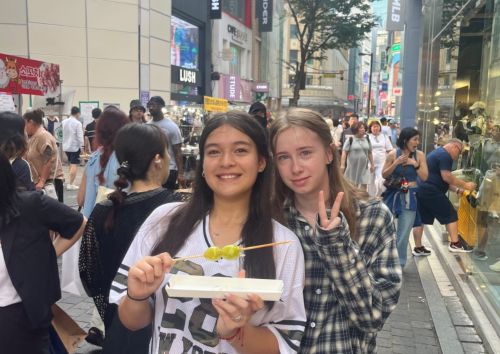
 Your teenager has been talking to you about South Korea for quite some time now. Maybe it all started with a TV show, a musician, or a friend who went there. Now, they’re talking to you about it serio... read
How to become a foreign exchange student in High School: a guide
- What are the requirements to become a foreign exchange student?
- How does the application process work, step by step?
- How are host families selected?
- How does an exchange student program work?
- What does a typical exchange program look like day to day?
- Who pays for a foreign exchange program, and how much does it cost?
- How to apply for a High School Exchange program abroad
- What are the long-term benefits of a student exchange?
- Ready to get started?
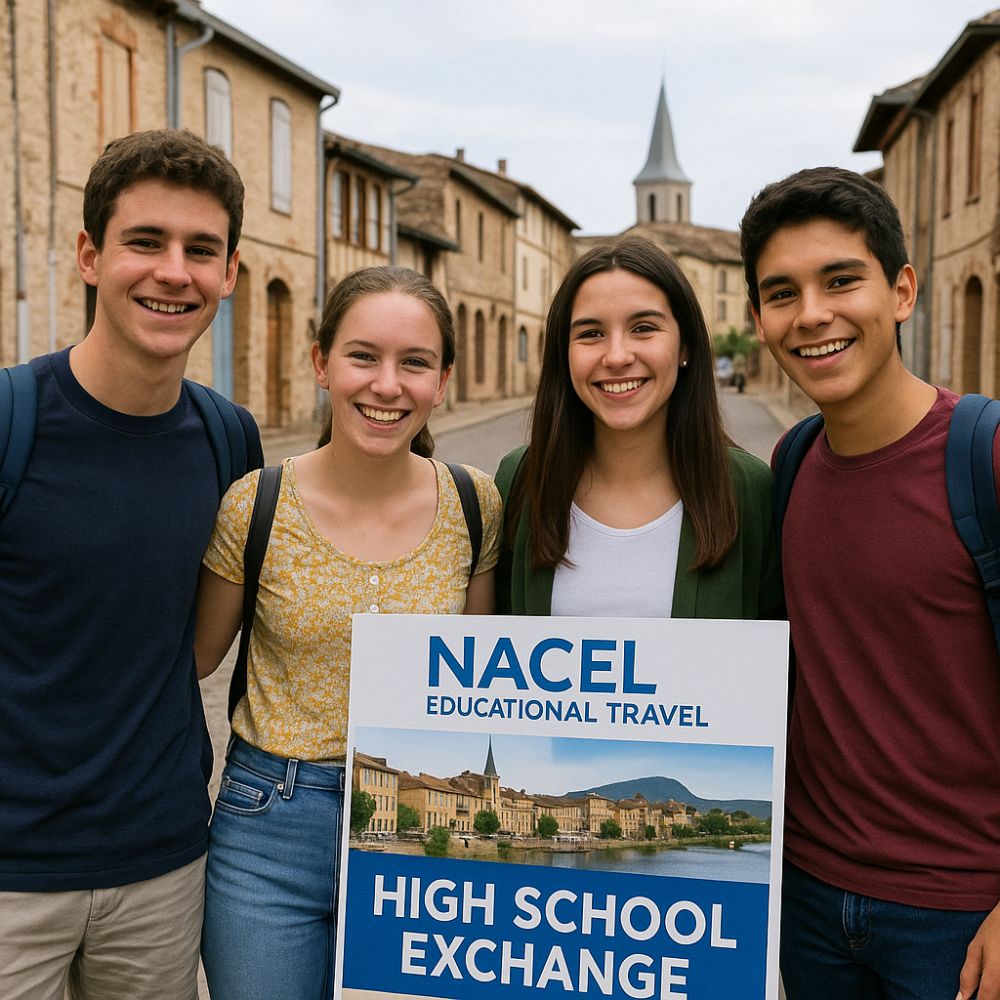
A foreign exchange program for high schoolers is one of the most exciting ways to discover a new culture, learn another language, and grow as a person. Whether you join a summer abroad program or spend a full exchange year overseas, Nacel Educational Travel offers safe, life-changing experiences for students around the world.
"My experience in France was amazing! I traveled through Nacel to Lisle-sur-Tarn, a small town in the south of France, and lived there for 1 month. My host family was great, and I felt like I was at home." Leo, Nacel student, Summer Homestay Immersion France
"My experience in Asturias, Spain was wonderful. I had the best host family, the best school, and the best host sister and friends. Now I’m both bicultural and bilingual. I wouldn’t trade my experience for the world!" Brandy, Nacel student, High School exchange in Spain
"The Asturias, Spain program is one of a kind. It provides a unique, full-immersion experience with many opportunities for rich cultural experiences, including native language spoken, community celebrations, and generations of family living nearby." Allison, parent, Summer Homestay Immersion Spain
A foreign exchange program for high schoolers might be the perfect adventure for you! Whether you want to study abroad for a summer or spend a full exchange year, this guide explains the requirements, application process, and benefits of joining an exchange student program.
What are the requirements to become a foreign exchange student?
Most foreign exchange programs for high schoolers are open to students who are curious, adaptable, and eager to learn. To participate, you should:
- Be between 14 and 18 years old
- Have a good academic record and a desire to learn
- Show maturity, motivation, and curiosity about other cultures.
- Have basic language skills in the host country’s language (for example, English, French, or Spanish).
- Be able to adapt to new environments and respect different traditions and lifestyles.
To prove their ability to become an exchange student abroad, students must also complete an application, provide school transcripts, a motivation letter, a video, and usually take an interview to ensure they’re ready for the experience.
This is worth it! Families often see how enriching these experiences can be.
"Our kid spent a year abroad, became fluent in French, and was enriched with a great experience. Cultural immersion cannot be better with a great match with a hosting family." Karina, parent
"Our daughter wanted to practice her Spanish language skills outside of the classroom. The host family was very nice, and the fact that the family did not speak English gave our daughter an excellent opportunity." Mother of Nisha (15)
How does the application process work, step by step?
Starting your study abroad journey is easier than you think. With Nacel’s help, you’ll be guided through every step.
- Choose a trusted organization: Work with an experienced exchange agency, which offers personalized guidance and support.
- Select your destination: France, Spain, Ireland, Canada, and more.
- Apply online and submit your application package: Submit your school records and motivation letter, as well as a presentation video.
- Get matched with a host family or a boarding school abroad: Nacel carefully selects safe, welcoming families.
- Obtain your visa and travel documents: Your organization will help you prepare everything you need before departure.
- Prepare for departure: Receive full support and orientation from your personal advisor.
"Nacel was receptive to our initial inquiries. The staff was very informative, friendly, and instilled confidence in both students and parents about the exchange experience." Allison, parent
If you’re searching for a cheap exchange student program, Nacel also offers shorter summer abroad programs for high schoolers and public-school placements to make studying abroad more affordable.
How are host families selected?
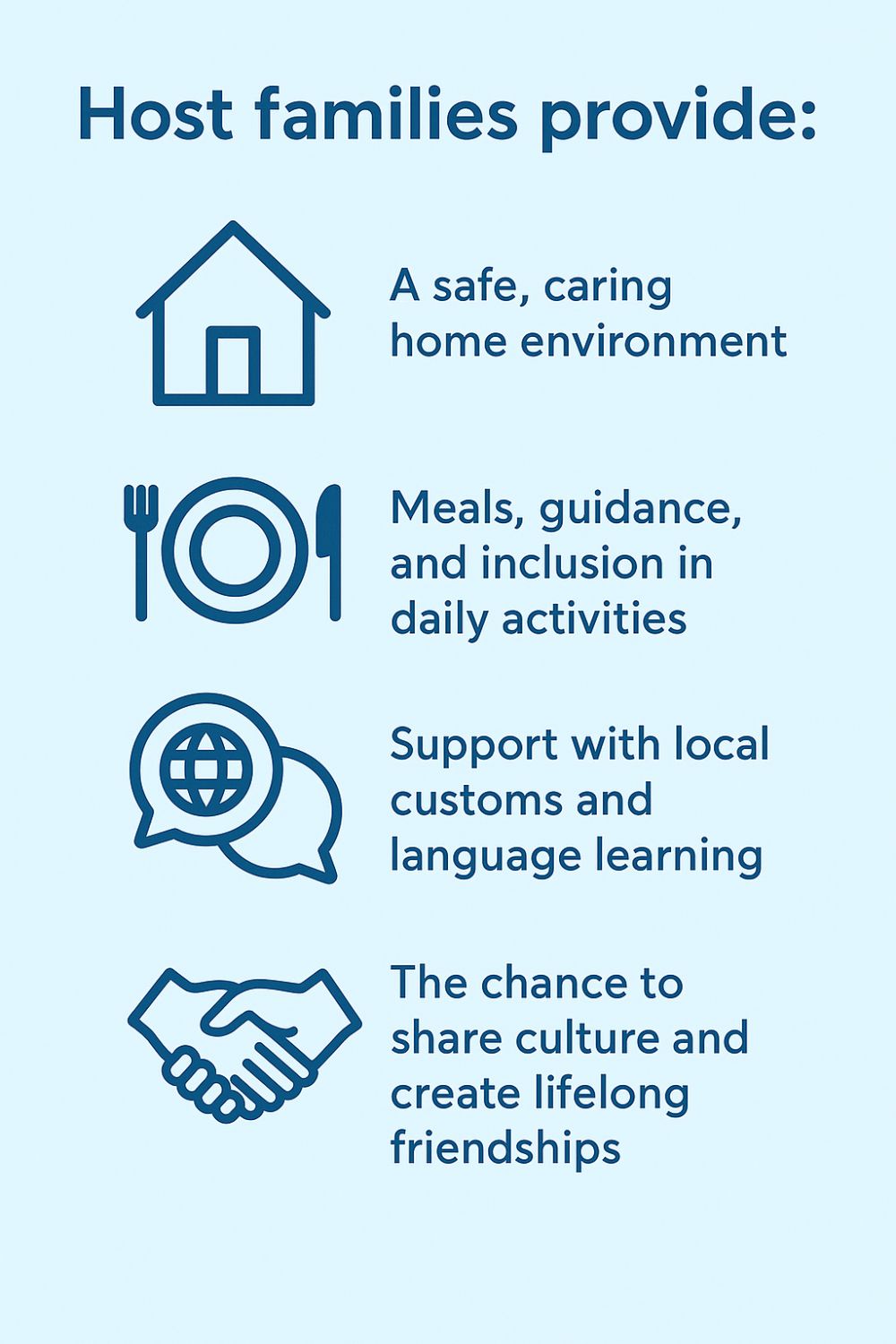
Becoming a host family is another way to enjoy the magic of cultural exchange. Host families open their homes to international students, offering them support and belonging.
"The host family placement was wonderful. It was a great fit for the student. They were highly supportive, caring, and kept up communication with parents of the exchange student." Allison, parent
"I had the best host family. I wouldn’t trade my experience for the world." Brandy, Nacel student
“I just wanted to say a very big thank-you for helping assist Damon on his exchange for France. He had an absolutely WONDERFUL time. His host family were the loveliest, kindest, best host family that anyone could ever have on their exchange trip.” Father
How does an exchange student program work?
In an exchange student program, you’ll live abroad with a local family, attend a nearby high school, and fully immerse yourself in the host country’s culture. Programs can last from a few weeks to an entire school year.
Organisations like Nacel manage:
- Matching exchange students with host families
- School placement
- Visa/logistics support
- Ongoing supervision
"The process with Nacel was very quick and straightforward. My advisor provided all the information I needed, and I felt informed and accompanied at every step of the process." Leo, Nacel student
"We are very thankful to our Nacel advisor, Céline, who navigated us through visas, adaptation, and successful completion." Karina, parent
What does a typical exchange program look like day to day?
A typical day as a foreign exchange student closely mirrors the daily rhythm of a local teenager, which is exactly the point.
- Mornings usually start with breakfast alongside your host family before heading to your host high school, where you attend regular classes with local students rather than a separate program for international students.
- After school, exchange students often join extracurricular clubs, sports teams, or simply head home to spend time with their host family, help with everyday tasks, and share a family dinner.
- Weekends tend to be more flexible: some students explore the host town with new friends, join family outings, or catch up on homework, while others use the time to travel and see more of the country.
The specific rhythm varies by host family and country, but the core experience stays consistent: full immersion in ordinary daily life, not a guided tour. That everyday routine, more than any single excursion, is what builds real language fluency and cultural understanding over the course of the program.
Who pays for a foreign exchange program, and how much does it cost?
In most foreign exchange programs, the student’s family covers:
- The program fee, which includes placement, supervision, and school enrollment
- Flights, travel insurance, and visas
- Personal expenses during the stay
In some countries, host families volunteer to host, allowing some cheap exchange student programs. This can make studying abroad for high schoolers more accessible. Some programs may offer a small stipend or cover expenses depending on local regulations.
"We found the price reasonable for the quality of care and organization provided. The experience was priceless for our daughter." Parent testimonial
Read our dedicated blog article about the cost of a High School exchange program.
How to apply for a High School Exchange program abroad
- Check out all the information about the large variety of destinations Nacel offers. We organize high school study abroad programs across Europe, the Americas, and Asia. The world is your oyster!
- Determine the language requirements. Of course, English is enough in English-speaking countries, but if you choose to attend an international boarding school in Europe, you will normally need a basic to good knowledge of the language spoken in your destination country, whether it's French, Italian, Portuguese, German, Spanish, or even Japanese!
- Consider the age requirements. Most programs are open to students aged 15 to 17 years of age, but some may be open to younger students from 13 years of age. Other programs welcome older students who are 18 or 19!
- Check if your passport is valid for the entire period you plan to be abroad and even beyond, just in case you decide to stay longer. If it is not, start the passport renewal process right away to avoid disappointment.
- Meet the Academic Counselor at your school to discuss your exchange intentions. You will need their approval to leave for a semester or longer and to understand your school's requirements to seamlessly continue your education upon return. For example, will your school need you to have passed subjects at a specific level while abroad? Do they need you to return home with a simple certificate of attendance or a full grade report from your school abroad?
- Contact Nacel's Educational Advisor. We will do our best to respond within 24 hours. Feel free to ask questions to check eligibility for your desired program and learn how to proceed. Nacel will then provide a dedicated handbook about your chosen destination.
- After making contact, a video call including your parents will be scheduled. This call is essential for you all to get to know your Nacel Advisor, who will be pleased to answer all of your questions. We will explain everything you need to know about your chosen program and the next steps needed to make it a reality!
What are the long-term benefits of a student exchange?
Joining a study abroad program for high schoolers offers lifelong benefits academically, personally, and culturally.
- Cultural awareness: Discover new perspectives and customs.
"During this month, I was able to experience French culture, tried new food like escargot and foie gras, and significantly improved my French level." Leo, Nacel student - Language fluency: Learn naturally through everyday conversation.
"Our kid became fluent in French and was enriched with a great experience. Cultural immersion cannot be better with a great match with a hosting family." Karina, parent - Academic growth: Experience a new school system and global education.
"I had the best school and the best host sister and friends, and now I’m both bicultural and bilingual." Brandy, Nacel student - Friendships: Form deep bonds across borders.
"Making friends and talking to the students was helpful in learning useful and common phrases.", Caitlin, Nacel student - Personal growth: Build confidence, independence, and empathy
"It helped our daughter to reconnect after the pandemic year and boosted her international career aspirations." Karina, parent
“It really was life-changing for Guy and something he will never forget. He made so many friends and most importantly, he became a young man and grew up a lot …” Father
Ready to get started?
A foreign exchange program for high schoolers isn’t just about learning in the classroom. It’s about learning through life. Whether you choose a summer abroad program, a semester, or a full exchange year, you’ll come home transformed.
"The school and town in which our student lived were supportive, kind, and welcoming, more than we ever imagined. We highly recommend the Nacel Asturias exchange program." Allison, parent
"Our experience with Nacel was just incredible. Our kids are friends now, and we hope it lasts many years." Karina, parent
"My host family was great, and I felt like I was at home. I would definitely recommend Nacel to other students who are interested in an exchange program, especially if they are interested in France." Leo, Nacel student
Ready to explore your options? Compare destinations, languages, and program lengths on our High School Abroad Programs page, or contact a Nacel advisor for personalized guidance.

Céline Gibassier is an Educational Advisor at Nacel International. She shares her passion for cultural exchange and language travel with students who want to study abroad and live new experiences.
She studied at Sciences Po Strasbourg and spent time abroad, giving her both strong academic knowledge and practical experience in student mobility, program development, and host family coordination.
Based in France, Céline has built a wide international network in the language travel and education fields. In her role, she helps students and host families work well together, ensures quality service, and supports meaningful and life-changing travel experiences.