

 Many adults quietly believe they missed their chance to become fluent in another language. The truth is very different.Research shows that adults bring powerful advantages to language learning, from s... read
Learn French in France: Summer Camp or Homestay for Your Teenager?
- How parents can choose a summer language camp in France
- Why France is still the most powerful place to learn French
- What a French summer camp looks like
- When a summer camp is not the best fit
- What a homestay in France looks like
- When a homestay is not the best fit
- Summer camp or homestay: how to choose
- Three real scenarios
- What to check before you book
- The right stay is the one that fits your child
How parents can choose a summer language camp in France
You have decided France is the right place for your child to learn French. Good call. Now the harder question: which type of stay is the right fit?
Two formats come up again and again: a supervised summer camp with a group of international students, or a homestay immersion with a French family. Both take place in France. Both mean real French, every single day. But they are genuinely different experiences, and the right choice depends more on your child than on the programme.
We have been running programmes in France for over 65 years. This guide shares what we have learned about which format works for which kind of teenager.
Learn more about Summer camps
Why France is still the most powerful place to learn French

There are other destinations where French is spoken.Belgium, Switzerland, Canada and parts of Africa all offer the opportunity to immerse yourself in the language. However, for a teenager learning the language for the first time or looking to make significant progress, France has a unique advantage that is difficult to replicate elsewhere.
French is not just a tourist language in France. It is the only language in use. It is spoken everywhere: at the market, on the bus, at the dinner table and in the street. There is no fallback. This pressure can be productive for teenagers. Those who have studied French at school for three years but can barely speak it suddenly find that they have to, and they do.
We see this every summer. A teenager arrives speaking textbook French, but after two weeks of using it every day, they stop translating in their head.
France also inspires teenagers to care about the language. There's the food, the towns, the people and the way of life. Students return not only with improved French, but also with a genuine curiosity about the country.
Nacel has decades of experience working with French host families, language schools and summer camps. This experience is invaluable when it comes to matching your child with the right placement.
Learn more about Homestay in France
"I returned to this camp two summers in a row. I made good friends with French teenagers and we still keep in touch on social media. The two weeks always go by really fast because there is so much to do and such good company. When I came back home I kept practising my French with them by video call. It gave me a lot more confidence speaking French at school." - Student, Nacel summer camp in France (GoAbroad)
What a French summer camp looks like
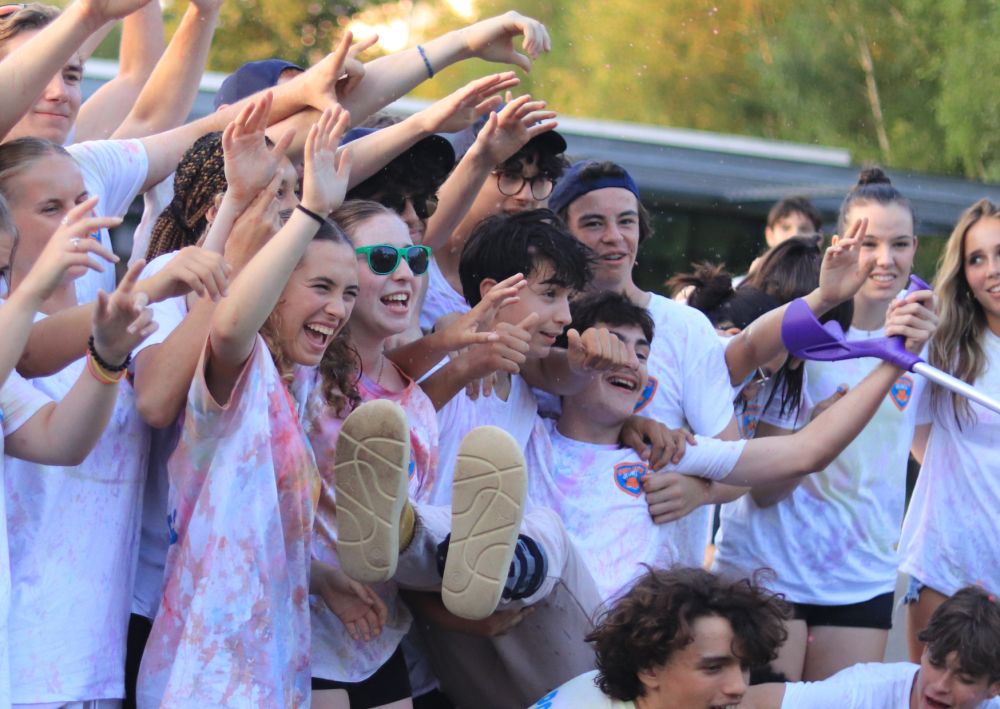
A summer camp is the most organised option we offer. Your child will join a group of teenagers from around the world and follow a clear daily programme throughout their stay.
A typical day at camp involves morning French lessons. Students are placed in small groups based on their level, so that everyone can participate and enjoy themselves. Afternoons are spent doing activities such as sports, cultural visits and outdoor excursions. Evenings are social, with group games, events or free time with other participants.
The days are full. There is always something happening and most teenagers love that.
Where the camps take place
Nacel runs summer camps in Paris, sport camps in Vichy, Montauban and Macon. We also offer beach camps on the French Riviera for beach lovers. The region matters. A camp by the sea in the south of France feels different to one in Paris. We can help you choose a location that suits your child's personality.
Summer camps work best for teenagers who:
- are going abroad without their parents for the first time;
- like being part of a group and making new friends;
- are beginners or lower intermediate in French;
- need clear structure and adults nearby.
When a summer camp is not the best fit
If your teenager is already fairly independent and specifically wants to live inside French daily life, rather than alongside other international students, the camp format may feel limiting. Outside of class, English tends to surface between participants from different countries. That is natural, but it does reduce the immersion.
What a homestay in France looks like
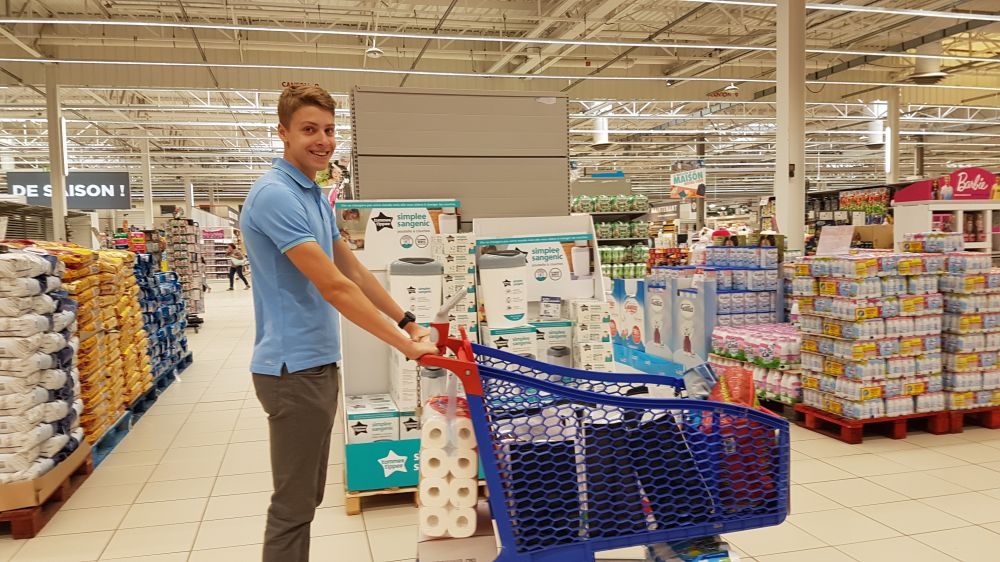
Homestays offer a unique experience. During their stay, your child lives with a French host family. They sleep in the family home, eat meals with them and take part in everyday French life.
A typical homestay day
Most mornings start with French lessons at a local school or language centre or even at a private teachers home. From the early afternoon onwards, your child joins the family again. That is where the real learning happens.
Dinner is eaten in French. Watching French television. Helping with small tasks around the house. Going to the market on Saturday morning, these moments are not structured.It is these moments that make a homestay so effective.
There is no common room full of other international students to retreat to at the end of the day. It's just the family and French from the moment they come home.
Homestays work best for teenagers who:
- are curious about how French people actually live
- have at least some French and are not afraid to practise it
- are happy spending time with adults, not just peers
- want real fluency, not just better marks in class
- are 13 or older, especially those with a specific goal, such as an exam or teens who really want to improve their spoken French.
“My daughter had a wonderful time staying with a lovely and welcoming family in Paris. Nacel really made the whole process reassuring and gave great comfort to both us and our daughter.” - Father of Violet, Nacel homestay in France
“Thank you for your support of Aaron on his homestay and school stay in France. He is having the most amazing experience with his wonderful host family. They are extremely welcoming and accommodating. We could not have hoped for a more positive experience.” - Parent of Aaron, Nacel homestay and school immersion in France
When a homestay is not the best fit
Without the right preparation, a very shy teenager or someone going abroad alone for the first time can find a homestay lonely. It requires social effort. Students who wait to be included will find it harder than those who make the first move.
It is also easier to settle into a homestay if you already have some knowledge of French. A complete beginner placed with a family that speaks little English may find the first few days very challenging. At Nacel, we carefully match families to ensure there is an adequate level of communication from day one.
Summer camp or homestay: how to choose
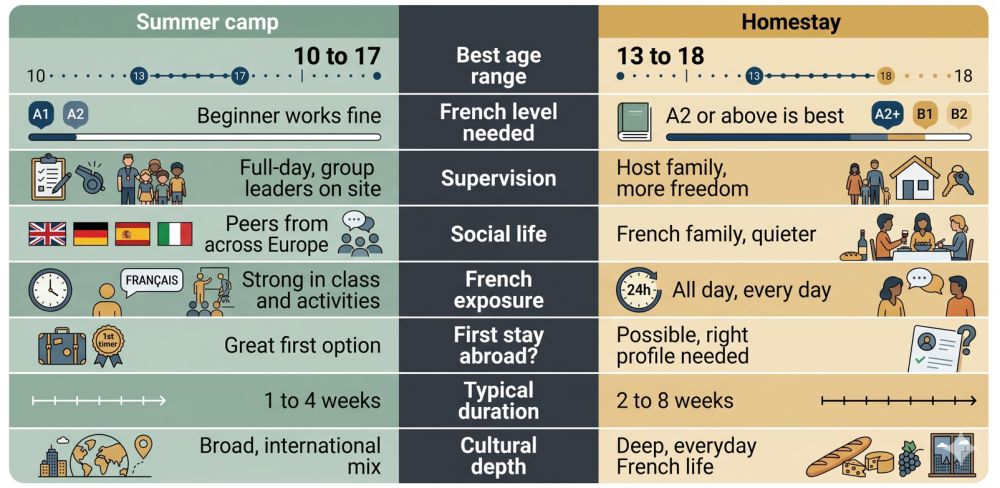
Both formats are effective. Either one will help your child to improve their French. The question is which one is right for your child at this moment in time.
Three real scenarios
Your child is 12, going abroad alone for the first time, beginner level.
They are excited but you are not sure how they will cope without a familiar routine around them.
Our advice: Summer camp. The group, the clear daily timetable, and the supervised activities give a first-time traveller the structure they need to feel safe and start speaking.
Your child is 15, has been learning French for three years, and wants to actually use it.
School has given them a base. They are ready for something more real. They are fairly independent and comfortable around adults.
Our advice: Homestay. Living with a French family will push them to use what they already know, every day. That daily practice is what turns school French into real French.
Your child is 13, sociable, intermediate level, and wants a good summer as well as better French.
Language matters but so does the experience. They want friends, activities, and good memories, not just lessons.
Our advice: Either format can work here. A summer camp gives them the social energy and the activities. A homestay with a family that has teenagers of a similar age gives them depth and daily immersion. The choice comes down to whether they prefer a peer group or a family setting. In this case we may also advise a French Summer sports camp with French teens for the complete immersion experience. Depending on the level of sportiness ofcourse.
What to check before you book
Once you have chosen the format, the quality of the programme itself becomes important. Here are some questions worth asking about both summer camps and homestays.
- How many hours a day will your child actually spend speaking French, rather than just sitting in a classroom?
- For summer camps, are students grouped by nationality or mixed together? A class that is mostly one nationality limits immersion outside of lesson time.
- For homestays, how are families selected and visited? What happens if the placement is not working?
- Who is responsible for your child outside of structured hours and how does this work in practice?
- Can the dates and duration be arranged to fit around your school calendar?
Our advisors at Nacel like to speak to every family before making a recommendation. So do not hesitate to contact us if you have any questions. We want to know about your child's level and personality, and what they want from the experience. It is through this conversation that we find the right match, not just the right programme.
“Nacel was dedicated to finding the right family for our daughter Lily from the very start. The results could not have been better. The family was caring and generous and really made her feel at home. Nacel checked in with her every week to make sure things were going well. They exceeded all our expectations.”
Parent of Lily, Nacel summer homestay in France (GoOverseas)
The right stay is the one that fits your child
France is an excellent choice. The language is authentic, the culture is rich, and the progress students make in just a few weeks of proper immersion is difficult to replicate at home.
It's the attention to detail that transforms a stay from something your child merely survives into something they want to do again.
Ready to find the right fit? Talk to our team and schedule a meeting or call us. We can help you choose between a summer camp and a homestay in France based on your child's profile, level and goals.

Jojanneke is the Nacel Educational Travel Team Manager and has been working with Nacel since February 2022.
She communicates with students from all over the world to understand exactly what they are looking for and to advise them on the programs that best suit their interest and their budget. She feels very fortunate to have had the opportunity to travel to many different countries and work in the Netherlands, Guatemala, Spain, Portugal, France, Bulgaria and Luxembourg. She studied at a Dutch university.
Jojanneke also participated in a Spanish language stay in Guatemala and has studied in France. This is why she knows perfectly the needs of future exchange students. But as a mother herself, she also understands the needs and concerns of parents who send their child abroad. She provides the empathy and understanding that parents and students need throughout the process of their project.
 This guide is here to help students and parents understand the different types of summer programs in Paris for high school students, what each format offers, and how to find the best fit depending on ...