

 This article helps you as a parent choose the right Nacel program for your child by comparing five main options: High School Abroad, Homestay + High School Integration, Summer Camps Abroad, Sports Sum... read
How high school graduation works in Canada?

Canada does not have a national school system. Each province and territory sets its own rules. The good news is that the overall structure is similar across the country and quite easy to understand once you break it down.
Most provinces consider high school to be Grades 9 to 12, roughly ages 14 to 18. Students work in a credit semester system. Every full course is worth one credit, and various half credit courses which add up toward 30 credits for graduation.
Let’s look at one province in detail. For Nacel, that province is often Manitoba. Within Manitoba, many students go to school in Winnipeg.
So let us follow a typical student into Manitoba and see what Grade 11, Grade 12 and graduation really mean.
How schools handle international students and previous schooling

Now imagine a student, let us call her Lara, who has just finished Grade 10 in her home country and wants to attend Grade 11 and Grade 12 in Winnipeg. Her family sends transcripts for their Grade 9 and 10 years of school.
The Manitoba school looks at each subject line by line.
English studied for several years at a serious level may become the equivalent of earlier English credits. Each student's English will be assessed upon arrival and they would be placed in the appropriate level . EAL English is often necessary to get them up to speed and a Regular 40S English is required for any future studies. Mathematics transfer quite easily and Sciences depend on the curriculum. Grade 11 Canadian History is also required for graduation. Students must take Physical Education each year as well as a mandatory subject. Each school will then decide how many foreign credits that transfer to Manitoba credits and in which categories.
After that, a plan is built for the remaining credits. The school checks which compulsory and elective Manitoba courses Lara still needs and how many Grade 11 and Grade 12 options she should add. The goal is simple. By the end of Grade 12, her total must reach 30 credits, with all the right boxes ticked.
At this point graduation becomes a realistic goal.
To earn a Manitoba high school diploma, a student must:
- Complete at least 30 credits in total
- Include a mix of compulsory and optional (elective) courses
- Pass mandatory core subjects at each grade level
Compulsory courses are things like:
- English Language Arts (every year)
- Mathematics (every year)
- Science in Grades 9 and 10
- Social studies / geography / Canadian history in different grades
- Physical Education / Health in every high school year
Optional courses cover everything from arts and technology, french language, astronomy , robotics and much more.
So graduation is not just about being “in Grade 12”. It is about having the right total package of 30 credits.
Explore our High School Programs in Canada
Can an international student graduate in Canada?
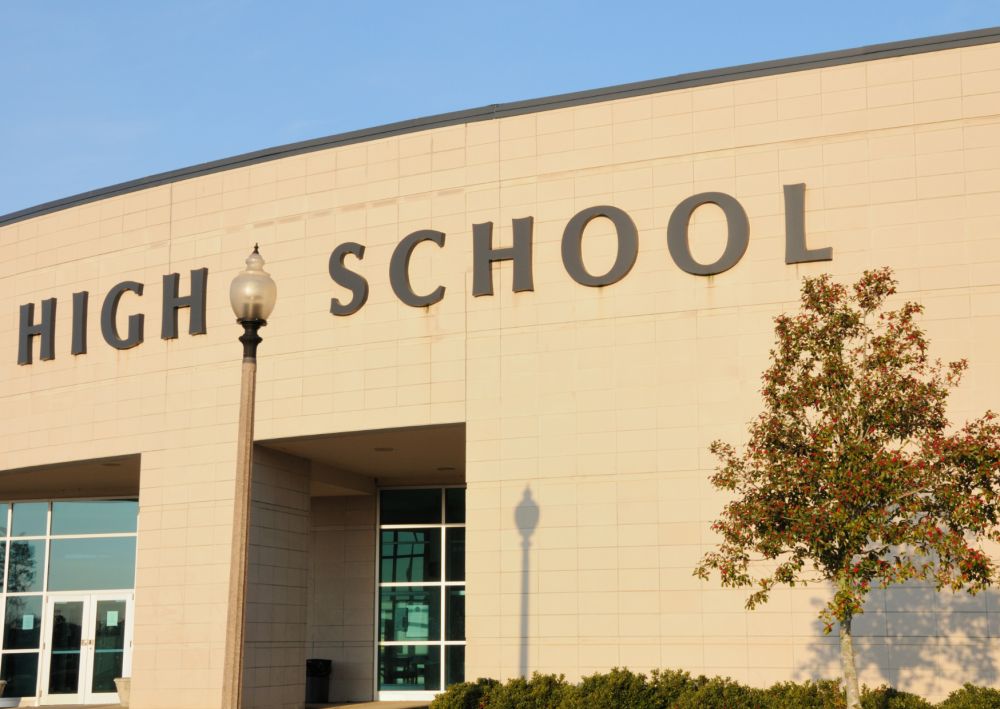
Short answer: yes, it is possible. Longer answer: it depends on credit transfer, timing and planning.
What schools do with previous credits
When an international student applies for a high school program in Manitoba, the school or school division:
- Looks at transcripts from Grades 9, 10 and 11 (or equivalent years)
- Decides which subjects can count as Manitoba credits
- Checks which compulsory Manitoba courses are still missing
- Builds a plan for the remaining time in Canada
The Manitoba government even has specific guidance for non-Canadian students, confirming that a Manitoba diploma is awarded once the 30-credit requirement is met, with a mix of compulsory and optional credits, including the compulsory credits earned in Manitoba itself.
Seven Oaks School Division will allow:
- International students can earn a Manitoba diploma
- They must reach at least 30 credits including essential courses
- Credits from the home school are carefully evaluated and transferred
- Grade 12 students must attend at least two semesters in Manitoba to obtain the diploma
So graduation is realistic, especially if a student has:
- Strong previous schooling
- Enough time in Canada
- A clear plan agreed with the Manitoba school
Coming for Grade 11: the safest path to a Canadian diploma
Grade 11 is often the most comfortable entry point for an international student who is serious about a Canadian diploma.
With two full school years ahead, a student has time to adapt to English, learn how Canadian classrooms work, and build relationships with teachers, classmates and the host family. It also gives the school more flexibility to place the missing compulsory Manitoba courses and the required Grade 11 and Grade 12 electives into the timetable.
Think again of Lara arriving for Grade 11. In her first year she might take English, Mathematics, History of Canada, Physical Education and perhaps science. She then chooses one or two elective courses that fit her interests. In Grade 12 she focuses on the last round of compulsory courses and enough senior electives to reach thirty credits.
Because the plan covers two years rather than one, everyone can breathe. There is space to adjust if English is harder than expected at the beginning. There is room for one or two changes of direction if she discovers a new interest through an elective.
If a family already has graduation in mind, Grade 11 is usually the ideal entry point.
Here is why.
More time to build the credit picture
Arriving in Grade 11 gives a student:
- One full year to adapt to English and Canadian teaching styles
- Time to make friends and feel confident
- A year to pick up any missing Grade 11 compulsory courses
- Then a full Grade 12 year to finish remaining requirements
Coming only for Grade 12: when is graduation possible?

Many families ask if a student can come for one year of Grade 12 and still go home with a Canadian diploma. Short answer is yes, as long as they take grade 11 Canadian history and grade 11 English .
The minimum for Grade 12 students
With Seven Oaks School Division Grade 12 international students must attend at least two semesters to obtain a Manitoba diploma.
Even with that full Grade 12 year, graduation depends on multiple factors. Grades 9-11 must be completed in their home country
If a student arrives with a very strong set of recognised credits, including equivalents for earlier English, math, science and social studies, it may be possible to complete the final required Grade 12 credits and reach 30 in one year.
If not, the Grade 12 year can still be very valuable as:
- A language immersion year
- A cultural and academic experience
- A preparation year for future university or college
But it may not end with a Manitoba diploma.
It is important to frame one-year Grade 12 programs as “graduation possible if the school confirms it”, not as a guarantee.
Contact us for more expert advise and information
Explore Manitoba

Jojanneke is the Nacel Educational Travel Team Manager and has been working with Nacel since February 2022.
She communicates with students from all over the world to understand exactly what they are looking for and to advise them on the programs that best suit their interest and their budget. She feels very fortunate to have had the opportunity to travel to many different countries and work in the Netherlands, Guatemala, Spain, Portugal, France, Bulgaria and Luxembourg. She studied at a Dutch university.
Jojanneke also participated in a Spanish language stay in Guatemala and has studied in France. This is why she knows perfectly the needs of future exchange students. But as a mother herself, she also understands the needs and concerns of parents who send their child abroad. She provides the empathy and understanding that parents and students need throughout the process of their project.
 Not sure which study abroad language stay fits your goals? This blog helps you choose the right Nacel Educational Travel program as a student or adult, whether you want to finally speak with confidenc...